Imler
Explore our foundational fully automated commercial candy floss vending robots engineered specifically for high-yield deployment in urban retail centers across Mbabane and global export markets.
The global retail concession dynamics are undergoing a seismic technological shift toward autonomous micro-fulfillment, self-service interactive kiosks, and robotic food assembly systems. In high-traffic commercial zones across Southern Africa—most notably in Mbabane, Eswatini—commercial real estate developers, mall management authorities, and concession entrepreneurs are increasingly turning away from labor-intensive manual kiosks in favor of automated unattended retail hardware.
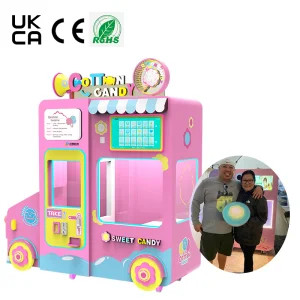
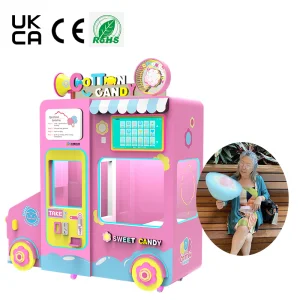
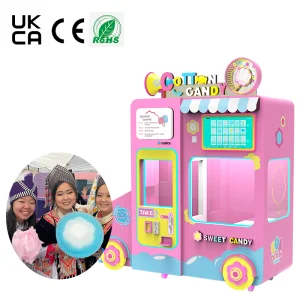
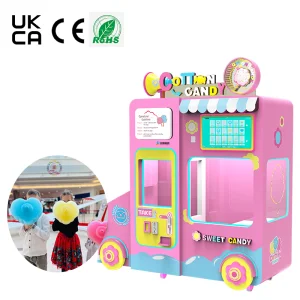
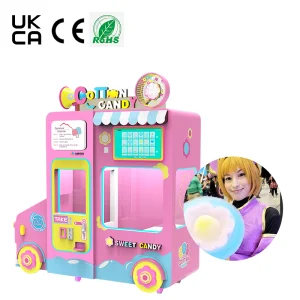
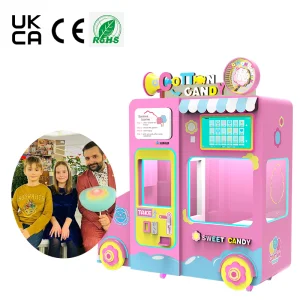
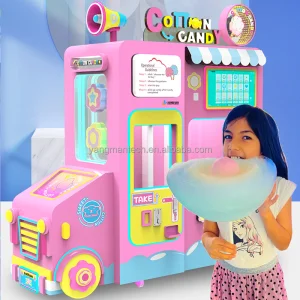
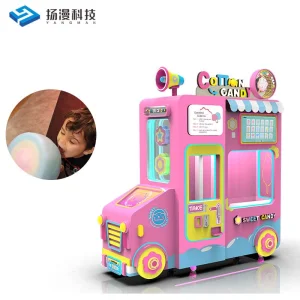
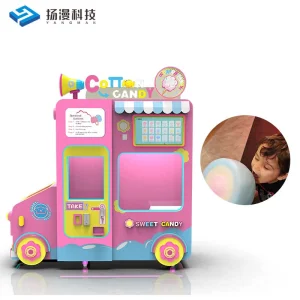
The Model-730 Robotic Cotton Candy Vending System stands at the pinnacle of this industry transformation. Designed and manufactured within our specialized 1,890 m² ISO-aligned production facility, Model-730 integrates high-precision thermal control, multi-axis robotic kinematics, automated climate stabilization micro-chambers, and advanced cloud IoT telemetry. Designed to solve traditional concession challenges—such as high operational labor overheads, inconsistent product quality, sugar waste, and sanitation vulnerabilities—the Model-730 delivers a standardized, captivating visual spectacle that converts store foot-traffic directly into predictable enterprise revenue.
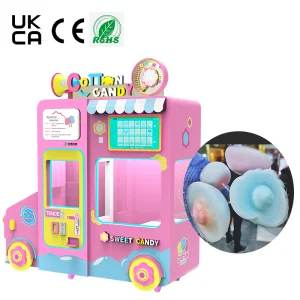
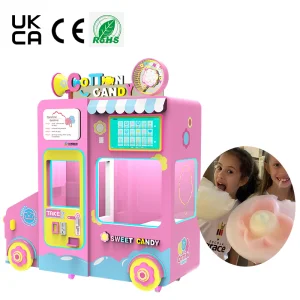
From an architectural standpoint, the Model-730 series transforms raw granulated sugar into intricate 3D geometric flower shapes, complete with vibrant natural food colors and multi-flavored layers. For commercial operators within the Mbabane metropolitan region, this machine represents not merely a novelty vending unit, but a fully automated business enterprise operating with up to 85-90% gross profit margins.
Mbabane, as the executive capital of Eswatini, serves as a central hub for commerce, tourism, and financial services in the region. The city's retail infrastructure—highlighted by premier developments like The Swazi Plaza, Mbabane Commercial Center, and Corporate Place—experiences constant, concentrated foot traffic composed of local families, school excursions, regional shoppers, and international tourists. Capitalizing on this captive audience requires equipment designed to excel under regional commercial conditions.
Mbabane operates primarily on a 230V / 50Hz single-phase electrical utility standard. Regional grid fluctuations and seasonal power surges can compromise standard electronics. Model-730 units configured for Mbabane incorporate industrial-grade internal voltage regulators, heavy-duty surge protection modules, and emergency power-off auto-recovery systems, ensuring uninterrupted operation during local power dips.
To support Mbabane's evolving cash and cashless transaction ecosystem, Model-730 machines support multi-currency MDB (Multi-Drop Bus) protocol interfaces. This allows seamless plug-and-play installation of local coin acceptors (SZL / ZAR), banknote validators, and international credit card readers (Visa, MasterCard, contactless NFC, and mobile wallets) tailored for visitors and local residents alike.
Furthermore, Mbabane's highland tropical climate experiences variable ambient humidity. Sugar crystallization requires precise ambient atmospheric control. The Model-730 incorporates a proprietary sealed internal micro-climate system with automated dehumidification, active air filtration, and constant heating chamber regulation. This engineering safeguard prevents sugar dampness, nozzle clogs, and structural collapse during multi-colored candy floss creation.
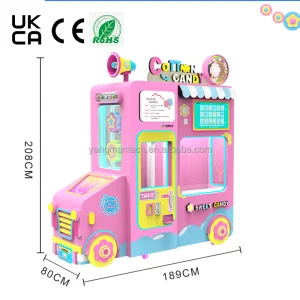
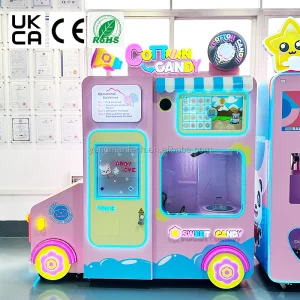
The Model-730 automated commercial cotton candy machine represents nine years of continuous R&D, structural engineering refinement, and software development by our core factory team. Built using food-grade 304 stainless steel and high-impact tempered display glass, the hardware platform blends structural durability with modern aesthetic appeal.
| Hardware Parameter | Technical Specification | Operational Advantage |
|---|---|---|
| Core Burner Motor | High-speed Brushless DC Motor (Up to 4,500 RPM) | Whisper-quiet operational acoustics (< 60dB), reduced thermal wear, extended lifespan. |
| Heating Element | PID Precise Thermal Controlled Ceramic Induction | Instantaneous heating ramp-up, precise temperature regulation (+/- 0.5°C), zero sugar charring. |
| Robotic Manipulation | Multi-Axis Precision Servo Motion Arm System | Enables 32+ complex 3D flower and layered shapes with millimeter-level accuracy. |
| User Display & UI | 21.5-inch Industrial HD Touchscreen Interface | Interactive customer ordering, custom video advertisement playback during process. |
| Sanitation & Hygiene | Automated Steam Self-Cleaning Chamber | Periodic thermal rinse flushes sugar residual, ensuring strict HACCP compliance. |
| Capacity & Storage | 4-Flavor Granulated Sugar Storage + Water Tank | Produces up to 200+ continuous sugar sticks before raw material replenishment is needed. |
Every Model-730 factory shipment comes integrated with our enterprise IoT telemetry management portal. Operators in Mbabane can remotely log in via desktop or mobile application to access real-time diagnostic reporting:
As direct factory manufacturers established in July 2016, our manufacturing facility boasts 1,890 m² of specialized assembly workshops, operating 5 continuous production lines backed by 25 high-precision industrial fabrication machines. By bypassing intermediate brokers and dealing directly with our engineering plant, buyers in Mbabane obtain factory-direct pricing, custom OEM branding solutions, and dedicated technical back-end support.
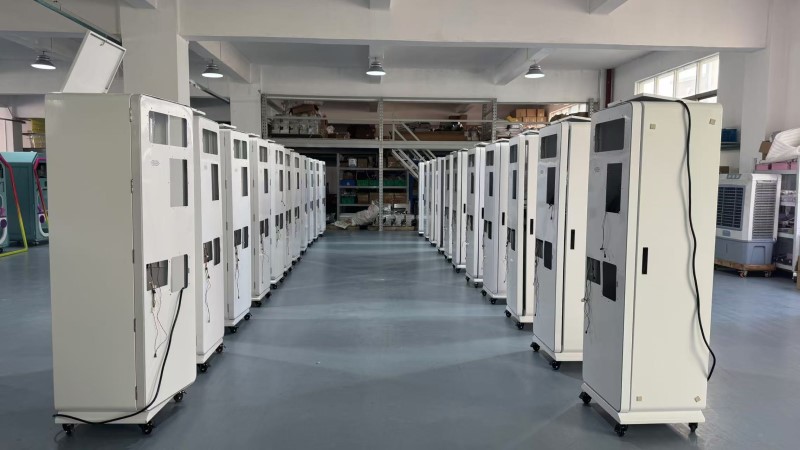
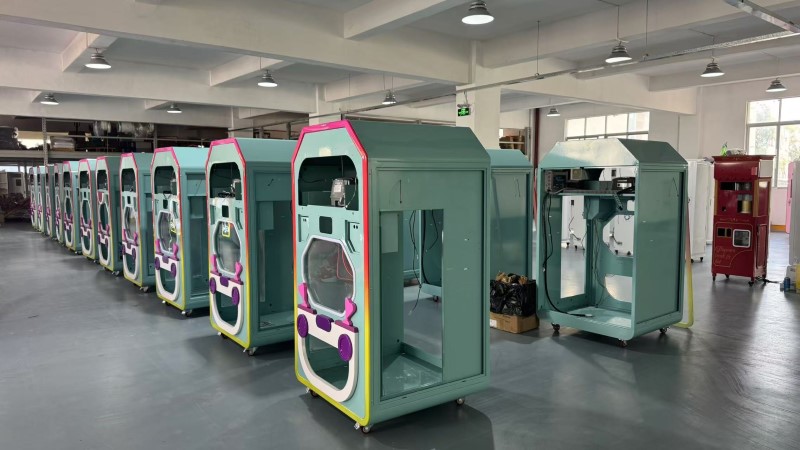
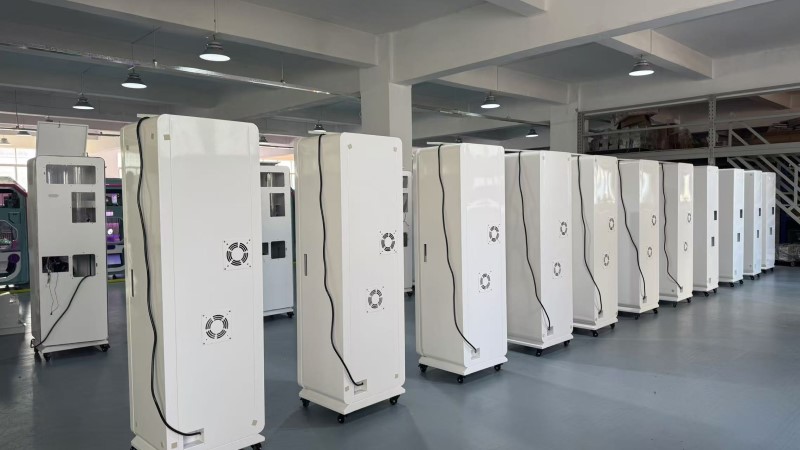
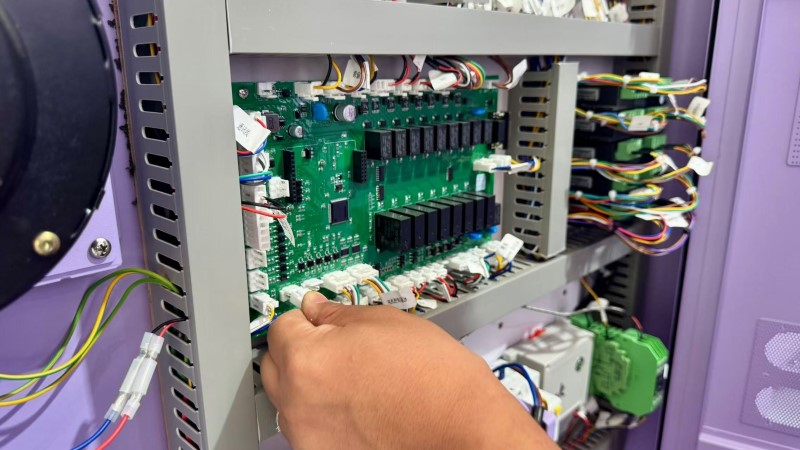
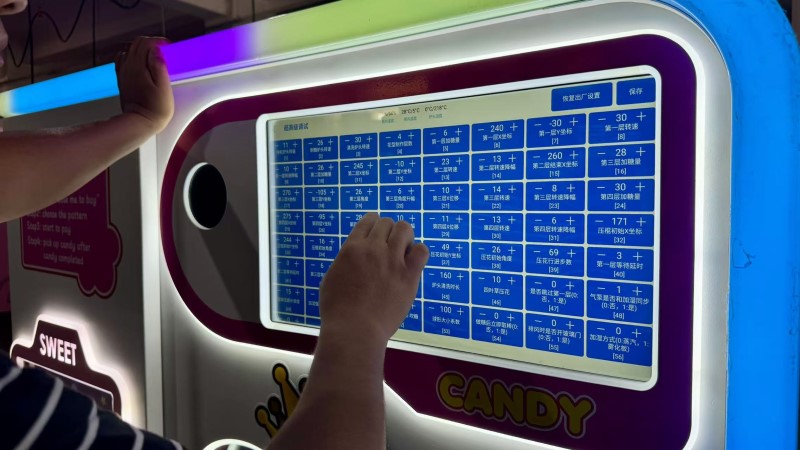
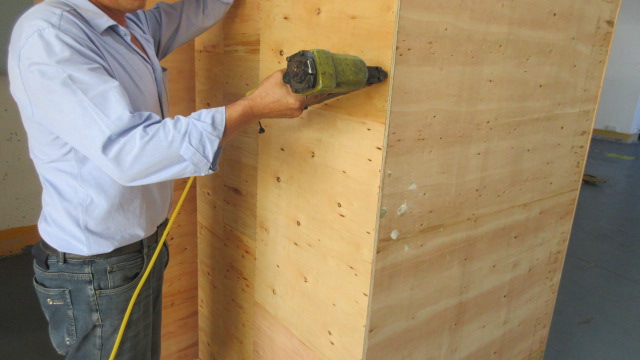
Every single Model-730 vending unit undergoes 100% rigorous multi-point inspection prior to export packing. From raw material traceability to stress testing thermal components under 48-hour continuous simulated operation, our dedicated QA/QC team enforces strict standards to guarantee zero operational downtime upon delivery to Mbabane.
We provide comprehensive export handling for Mbabane clients. Freight shipments are systematically routed via ocean freight to the Port of Durban, South Africa, followed by direct bonded transport into Eswatini. Custom export-grade reinforced wooden crate packaging protects sensitive internal robotic optics throughout maritime transit.
To ensure total safety, electrical compliance, and commercial viability in global markets, our Model-730 product series has been independently tested and certified by recognized international regulatory bodies. Purchasing from an audited factory guarantees that your machine conforms strictly to global safety, electrical security, and environmental protection guidelines.
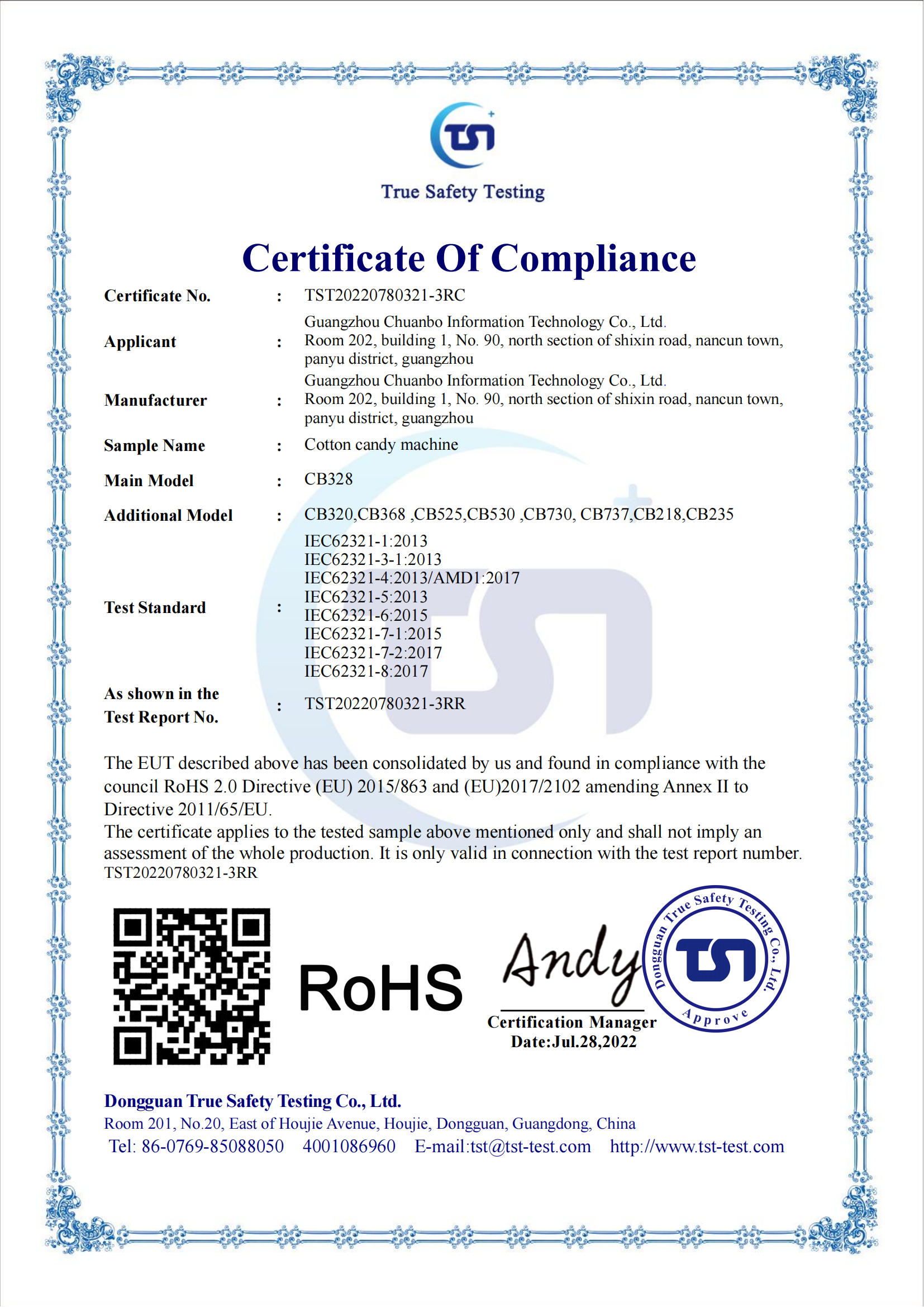
 RoHS Compliant
TST20220780321-3RC
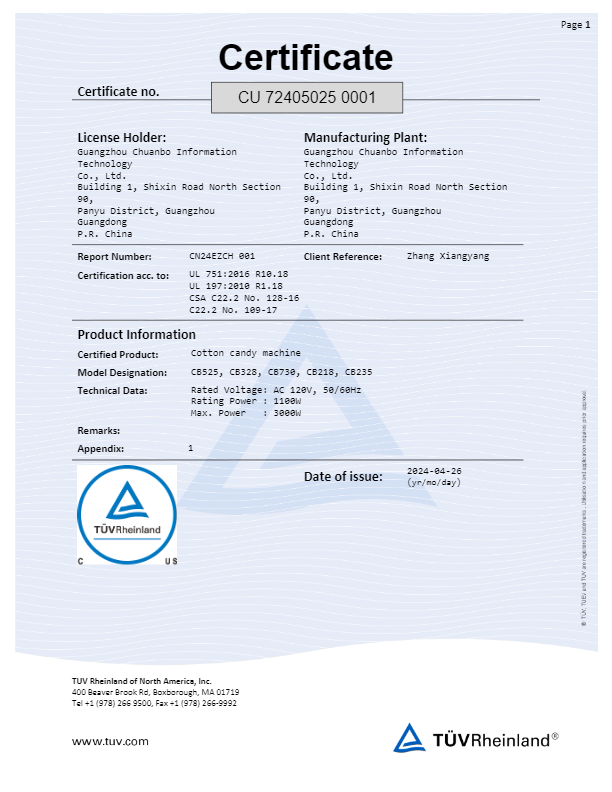
 UL Safety Certified
CU 72405025 0001
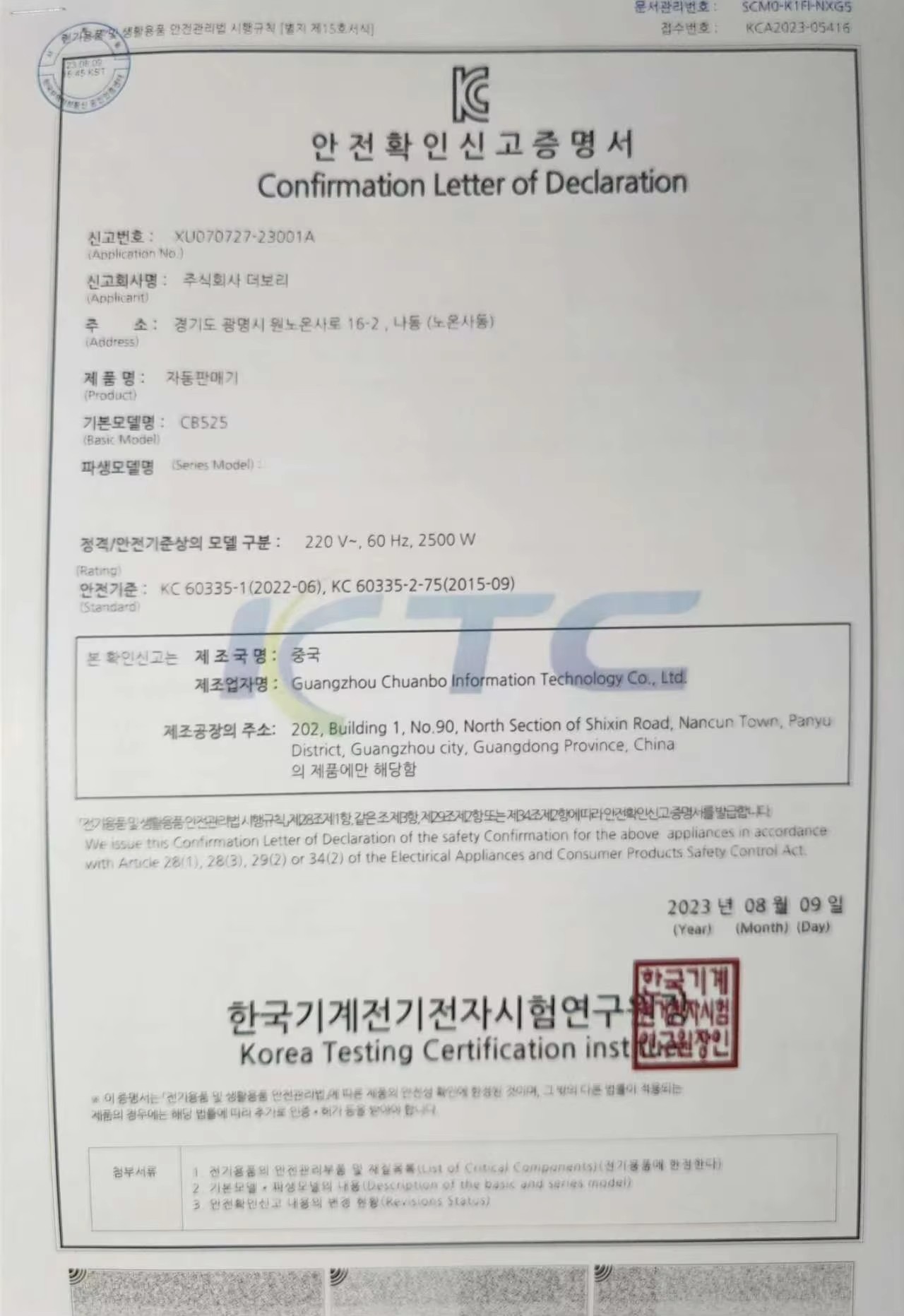
 KC Certification
XU070727-23001A
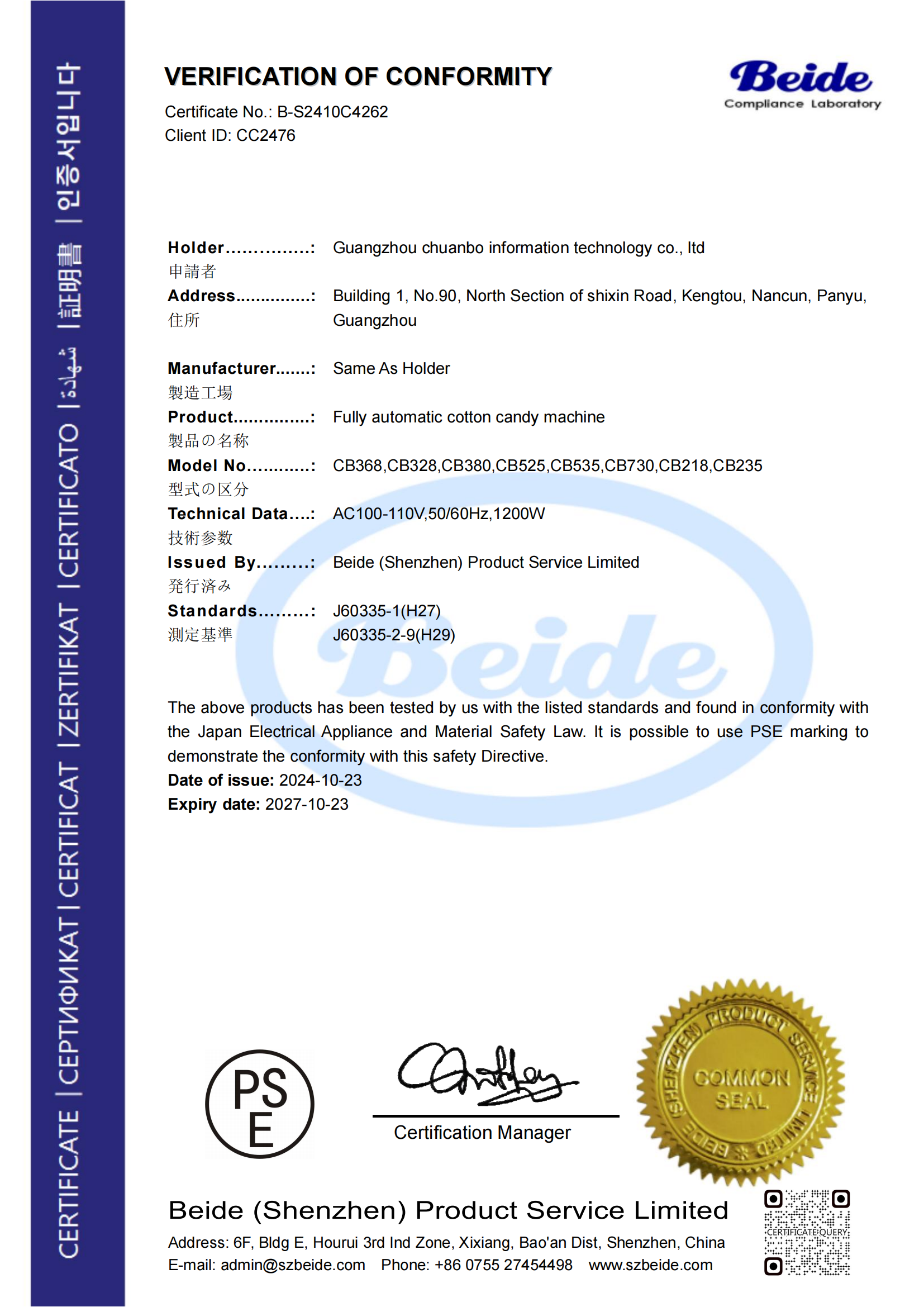
 PSE Standard
B-S2410C4262

 UKCA Compliant
CTICAF311241220042490DC
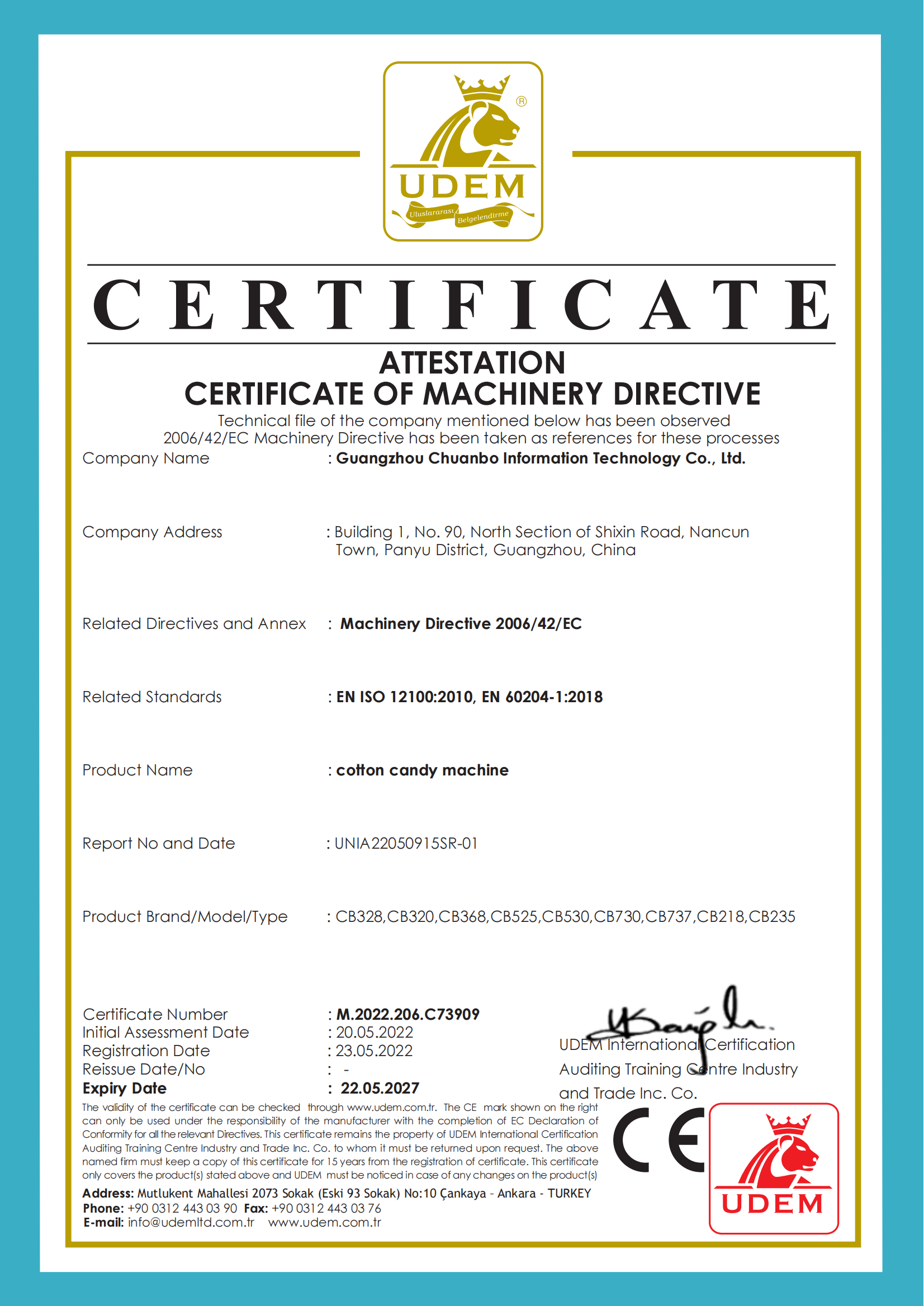
 CE Certified
M.2022.206.C73909
 UKCA Approved
CTICAF311241220042489AC
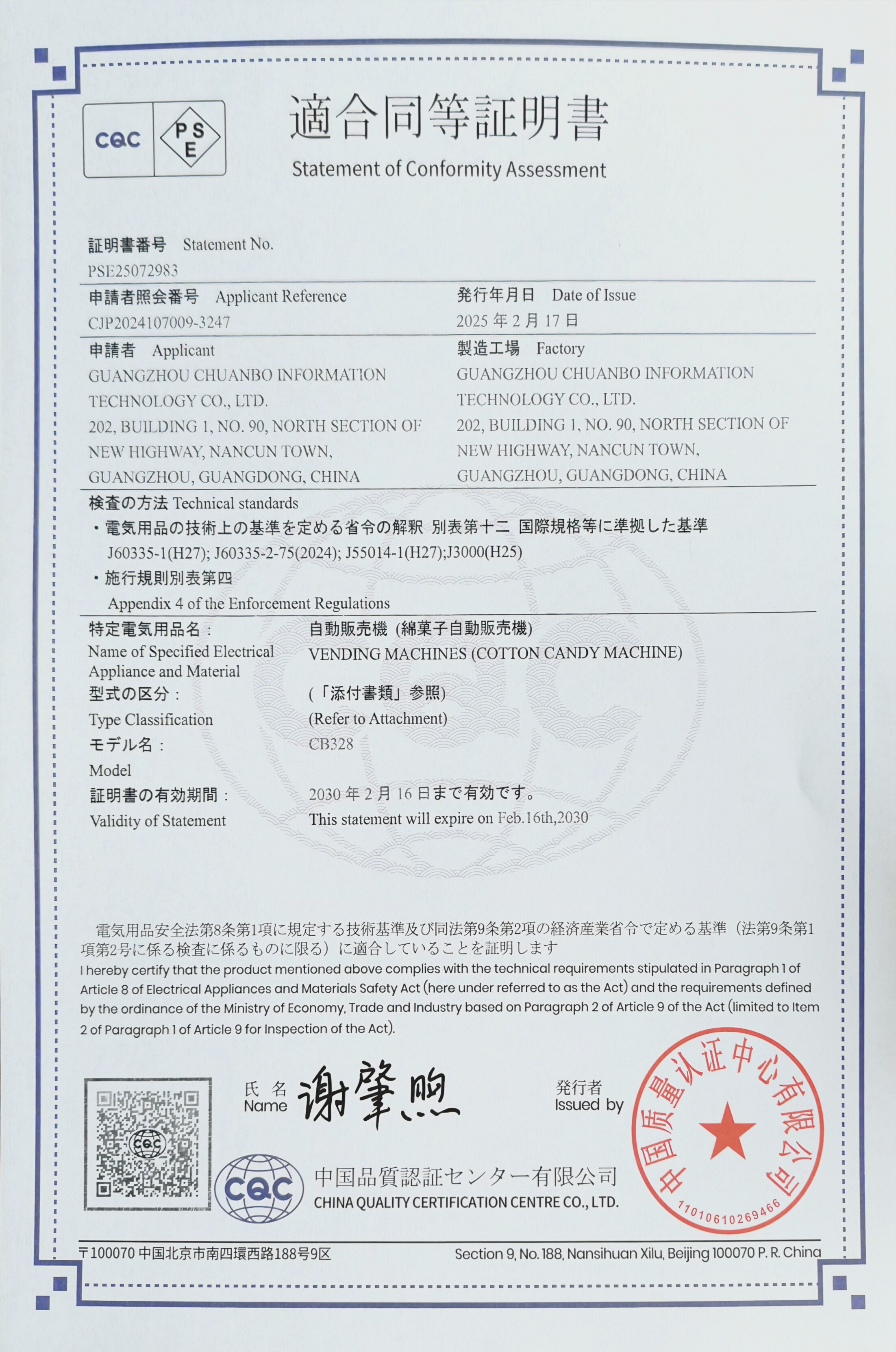 PSE Registered
PSE25072983
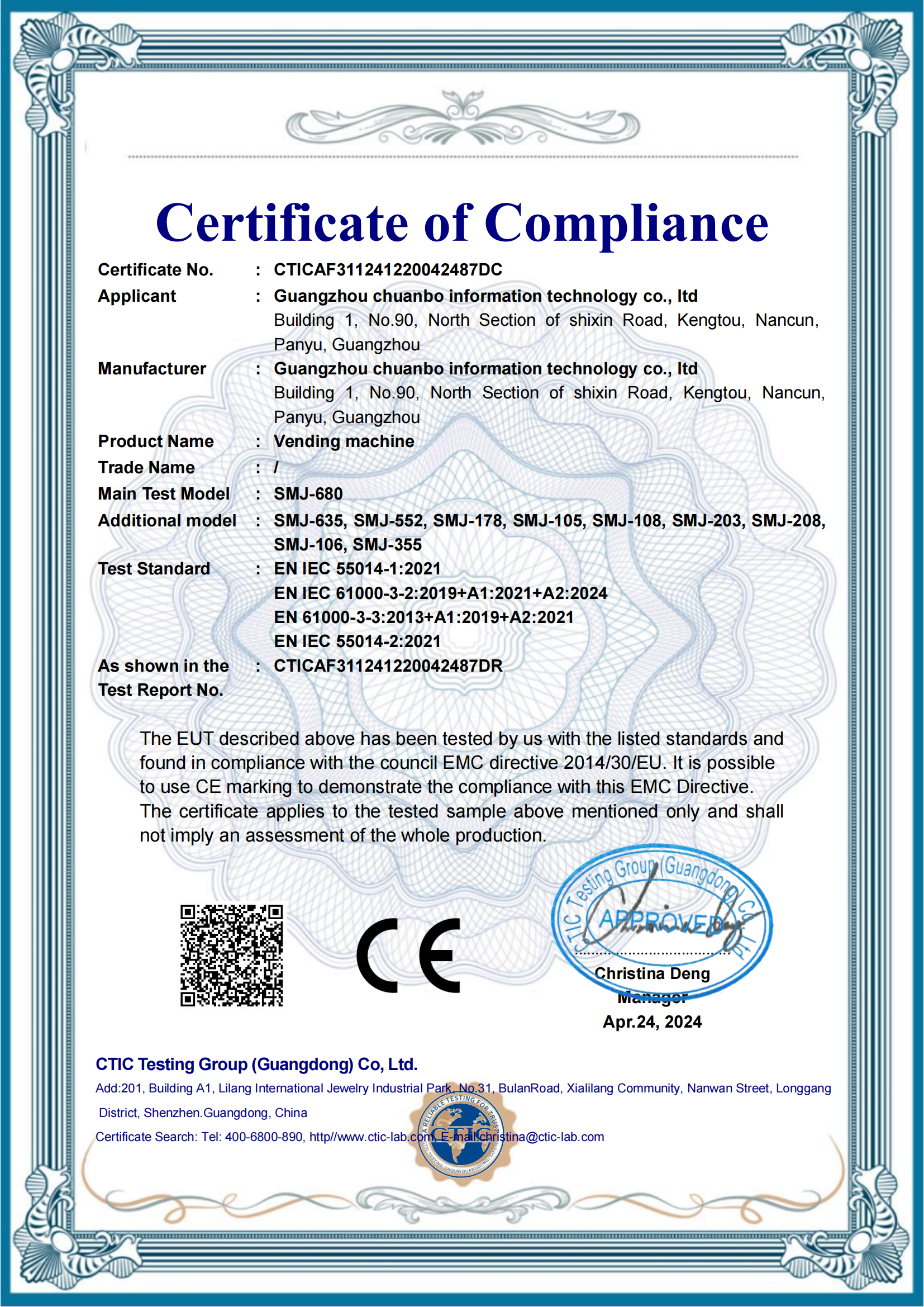 CE Verified
CTICAF311241220042487DC
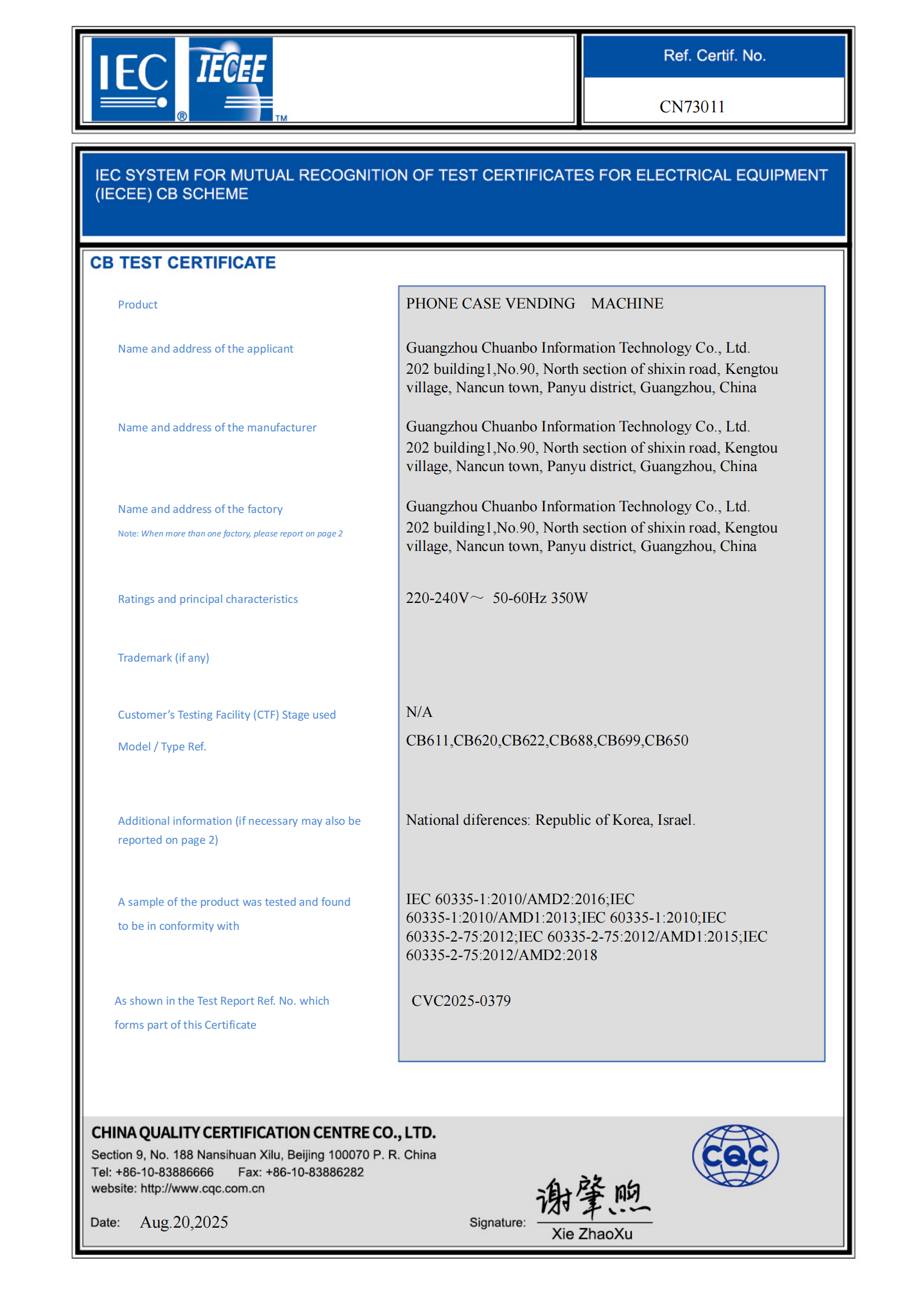
 CB Scheme
CN73011
Investing in a Model-730 commercial cotton candy vending system delivers exceptional capital efficiency compared to traditional food service franchises. Below is a representative unit economic breakdown for an operator deploying a single Model-730 machine in a high-traffic shopping destination in Mbabane.
Each cotton candy portion consumes approximately 30 grams of specialized granulated sugar and a paper stick. Total direct consumable cost per unit produced averages less than $0.15 - $0.25 USD.
In retail venues within Mbabane, complex 3D flower cotton candy commands retail pricing ranging between $3.00 and $5.00 USD equivalent (Eswatini Lilangeni / ZAR), yielding gross margins exceeding 85%.
At a conservative baseline of 40 sales per day, a single machine generates substantial monthly net cash flow, allowing total hardware capital expenditure cost recovery within 3 to 6 months of initial turn-key deployment.
Our organization operates as an established engineering leader dedicated exclusively to intelligent food service automation and commercial vending machine fabrication. The following data highlights our operational infrastructure and export metrics:
| Company Registration Date | 2016-07-19 |
| Factory Floor Space | 1,890 m² |
| Years in Industry & Exporting | 9 Years |
| Active Production Lines | 5 Specialized Lines |
| Specialized Fabrication Machines | 25 Units |
| Accepted Business Languages | English |
| Quality Control Protocols | Line Inspection on 100% Units |
| Raw Material Traceability | Standardized Supplier Auditing |
| QA/QC Dedicated Staff | 1 Full-time Auditor |
| R&D Engineering Department | 1 Graduate Lead Engineer |
| New Products Introduced Last Year | 15 Innovations launched |
| Primary Export Footprint | North America (25%), South America (16%), Eastern Europe (15%) |
Browse our complete catalog of commercial automated cotton candy machines, customizable OEM solutions, and coin/card acceptor vending robots engineered for global distribution.
Comprehensive answers regarding shipping, engineering specs, maintenance, and operation of the Model-730 series in the Mbabane market.
Connect directly with our senior technical sales team to receive comprehensive factory pricing, technical schematics, ROI forecasting workbooks, and custom shipping quotes for Mbabane and Southern Africa.