Imler
Imler
Imler
Imler
Explore our factory-direct catalog featuring high-capacity touchscreens, remote IoT diagnostics, and advanced sugar-spinning robotics engineered for high-yield operations.
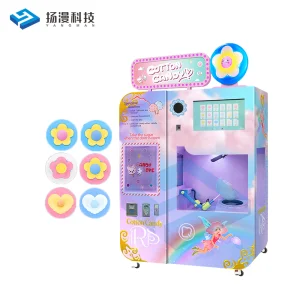
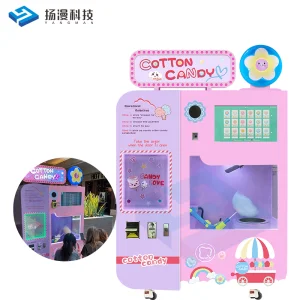
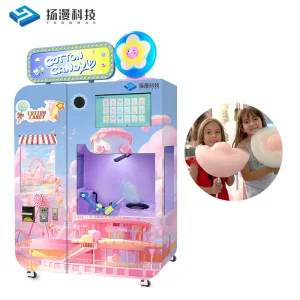
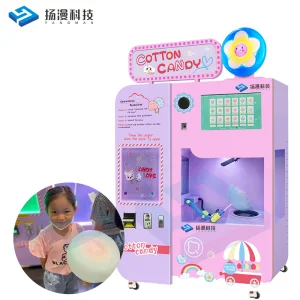
The global retail landscape is undergoing a dramatic structural transformation. Traditional vending machines dispensing pre-packaged goods are yielding ground to interactive, automated kiosks that deliver real-time product creation. Confectionery automation—specifically the manufacturing and deployment of smart cotton candy vending machines—has emerged as a premium investment class in the unattended retail sector. Among these systems, the Model-328 Cotton Candy Vending Machine represents the industry benchmark for operational stability, aesthetic appeal, and mechanical precision.
For international importers, amusement park operators, and vending network distributors, sourcing from verified Model-328 factories and exporters in China provides a significant structural advantage. By bypassing intermediaries and sourcing directly from advanced production facilities, global businesses secure optimized unit pricing, customizable SDK firmware, and ruggedized hardware configurations. The Model-328 is not merely a novelty vending machine; it is a high-margin, IoT-enabled revenue engine designed to capture impulse micro-transactions in high-traffic retail environments.
To evaluate the Model-328 from an engineering perspective requires an understanding of its core sub-systems. Unlike basic hobbyist modifications, the industrial-grade Model-328 integrates precision robotics, advanced thermodynamics, and active telemetry. Below is a detailed breakdown of the mechanical and structural architecture that ensures the machine's high uptime and continuous production capacity.
The system utilizes a 3-axis CNC linear actuator system driven by high-torque stepper motors. This ensures the mechanical arm grips, rotates, and translates the paper stick with sub-millimeter precision, enabling complex flower patterns.
At the center of the spinning bowl is an induction heating burner managed by a proportional-integral-derivative (PID) loop. This dynamic thermal management system maintains the melting chamber at precisely 185°C to 195°C to prevent sugar carbonization.
Sugar is highly hygroscopic. The Model-328 features an integrated closed-loop HVAC subsystem that maintains internal cabin relative humidity below 38%, preventing sugar melt and mechanical clogging in tropical regions.
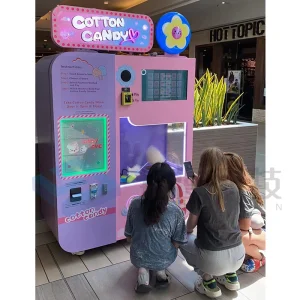
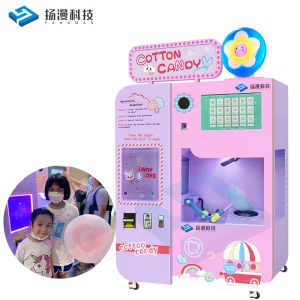
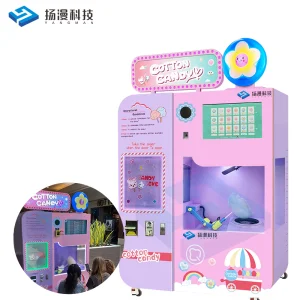
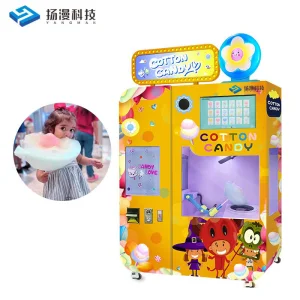
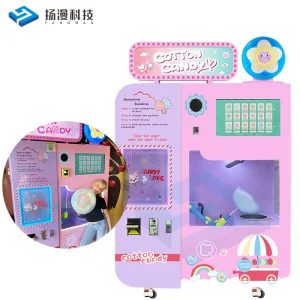
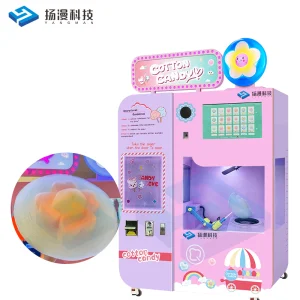
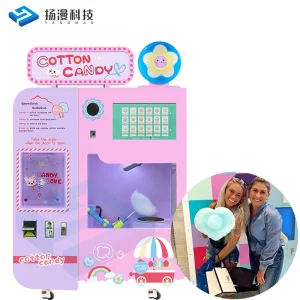
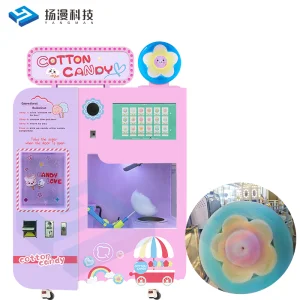
Model-328 factories employ medical-grade and food-grade materials to guarantee long-term operational longevity and compliance with international health standards. The spinning bowl is constructed from food-grade SUS304 stainless steel, preventing oxidization from repeated thermal exposure and dynamic cleaning cycles. The front facade features tempered double-pane glass with anti-fogging heaters, offering consumers a clear, unimpeded view of the robotic fabrication process.
| Component/Subsystem | Engineering Specification | Operational Benefit |
|---|---|---|
| Heating Assembly | 2500W High-Frequency Induction Burner with PID Loop | Consistent sugar melting temperature, rapid pre-heat under 60 seconds. |
| Motion Control | Dual-phase NEMA 23 stepper motors + industrial ball screws | Repeatable 3D flower shaping accuracy (error tolerance <0.5mm). |
| Climatic Control | Automated Compressor Dehumidification Unit (450W) | Ensures smooth, dry sugar spinning in ambient humidity up to 90%. |
| Dispenser System | 4-color or 6-color automated pressurized sugar silos | Supports creative multi-flavored, multi-tiered artistic designs. |
| Sanitization System | High-pressure water nozzle + automated hot-water rinse cycles | Self-cleans the spinning head after every 10-15 cycles, lowering labor overhead. |
China (particularly manufacturing clusters within the Pearl River Delta, such as Guangzhou and Shenzhen) is the primary sourcing ground for commercial smart vending machines. When sourcing the Model-328 from specialized Chinese factories, global enterprises benefit from structured supply chain integrations that are difficult to replicate elsewhere.
Exporters offer deep hardware and software adjustments. Factories can adapt the mainboard firmware to support custom currencies, local language packs, and external API interfaces for custom user flows.
Premium exporters certify their units to international standards, providing CE, FCC, RoHS, and UL certificates, which streamlines the customs clearance process in North America and the European Union.
Proximity to component manufacturers—including motor suppliers, touchscreen producers, and sheet metal fabricators—allows Chinese factories to offer highly competitive pricing structures.
A reputable Chinese Model-328 exporter does not merely ship products; they execute rigorous quality assurance (QA) protocols prior to container loading. Leading factories deploy continuous 72-hour stress tests, simulating high-demand operations by continuously spinning sugar and operating the robotic arm. Electrical subsystems undergo high-voltage grounding tests, and wireless telemetry antennas are calibrated for compatibility with Western GSM and LTE bands.
The modern vending business model hinges on low operational overhead. The Model-328 supports this by converting a traditional physical business into a digital asset portfolio. By utilizing cloud telemetry, a single operator can manage a fleet of 50 to 100 machines spread across a country, minimizing the need for physical on-site monitoring.
Model-328 exporters integrate advanced IoT gateways that communicate directly with a centralized SaaS dashboard via Wi-Fi, Ethernet, or 4G LTE. From this secure interface, operators can monitor critical operational metrics in real time:
To capture micro-transactions from tech-savvy consumers, the Model-328 is designed with modular payment slots. Exporters support the integration of Nayax, PAX, and other major card readers. The machine's board communicates via the standard Multi-Drop Bus (MDB 3.0) protocol, making it compatible with bill acceptors, coin mechanisms, and cashless payment terminals worldwide. This allows seamless payments through Visa, Mastercard, Apple Pay, Google Pay, and localized QR codes like Alipay, WeChat Pay, and Line Pay.
Understanding where to place the Model-328 is critical for maximizing daily throughput and accelerating ROI. The interactive nature of the machine makes it a powerful attraction in any venue with high family and pedestrian traffic.
Placing machines in central corridors or near food courts captures impulse purchases from families. The illuminated robotic process acts as a visual anchor that draws kids and parents alike.
Family Entertainment Centers (FECs), indoor play zones, and amusement parks are prime locations. The high capacity of the Model-328 (up to 300 sticks) easily handles large peak crowds on weekends.
Modern cinema lobbies benefit from unattended food concessions. The rapid 90-second cycle time of the Model-328 makes it a quick snack option for guests waiting for their movies.
A typical operational analysis of a Model-328 unit in a premium high-traffic location demonstrates a rapid path to amortization. With low ingredient costs (raw sugar and paper sticks cost less than $0.20 per unit) and retail pricing ranging from $4.00 to $8.00 depending on the market, the gross margin remains exceptionally high. Even under conservative sales estimates, operators often achieve full capital return on the hardware within 4 to 6 months.
When procurement managers negotiate supply contracts with Model-328 factories, implementing a structured quality control protocol is crucial. Below is an inspection checklist recommended for factory audits before shipping:
Deep technological and operational answers for professional importers and enterprise buyers.
The Model-328 is engineered specifically for high-capacity commercial use. It combines a 3-axis robotic arm with an active dehumidification system and a high-frequency PID heating head. This allows it to run continuously in high-humidity areas where other machines often clog or experience mechanical issues.
The machine features a built-in automated sanitization system. After a set number of cotton candy units are produced (typically every 10 to 15 servings), the machine sprays pressurized hot water into the spinning head, flushing out residual sugar buildup. The wastewater is piped into an internal drainage container or directed to an external outlet.
Yes. Qualified factories provide customized firmware. The front-facing Android touchscreen can be configured to support local languages, currency displays, and custom marketing videos during standby periods.
Reputable exporters provide full CE compliance certificates for the European market and FCC verification for North America. For specific regions, factories can configure machines with UL-recognized components, ensuring smooth customs processing and local safety approvals.
The Model-328 holds up to 300 paper sticks in its automated dispenser chamber. The sugar silos hold approximately 5-8 kg of sugar, enough for 200 to 250 servings before needing a refill. Sugar levels can be monitored in real-time through the IoT dashboard.
Exporters pack the machines in heavy-duty plywood crates. The internal components, including the robotic arm and burner, are secured with foam locks and wrapped in anti-moisture vacuum bags to prevent movement or rust during sea transit.
Browse our specialized configurations designed for outdoor mobile trucks, high-demand retail centers, and custom smart solutions.