Imler
Imler
Imler
Imler
As the demand for specialized coffee experiences scales globally, Chinese manufacturers have transitioned from traditional hardware assembly to high-tech "Smart Brewing" hubs. Our factory ecosystem integrates SDK-level customization, cloud-based telemetry, and industrial-grade extraction consistency to serve the next generation of HORECA and retail entrepreneurs.
The global cold brew coffee market is projected to expand at a CAGR of 25.1% through 2030. In the industrial sector, the focus has shifted from simple immersion to high-pressure pulse extraction and ultrasonic-assisted brewing. These methods reduce the traditional 24-hour steeping process to less than 2 hours while maintaining the signature low-acidity profile consumers crave.
Today's "China-Made" cold brew systems are no longer just containers; they are precision instruments capable of controlling TDS (Total Dissolved Solids) levels within ±0.1% accuracy, a critical requirement for global coffee chains looking for flavor consistency across thousands of locations.
Top Chinese factories have integrated Industry 4.0 principles into the production of cold brew coffee makers. This includes the use of medical-grade 316L stainless steel, laser-welded seams for aseptic environments, and automated CNC machining for high-tolerance components.
Supply Chain Advantage: By centralizing the production of pumps, sensors, and filtration membranes in industrial clusters like Guangdong and Zhejiang, China offers a 30-40% cost efficiency over European counterparts without compromising on E-E-A-T (Expertise, Authoritativeness, and Trustworthiness) standards. This resilience ensures that global procurement demands are met even during volatile shipping periods.
Modern offices are replacing traditional drip coffee with high-capacity cold brew vending solutions. The intent is "Premium Employee Perk" + "Operational Simplicity." Integrated payment systems allow for easy monetization in shared spaces.
Convenience stores require high-throughput machines that offer "Freshness Visibility." Transparent brewing chambers and SDK-linked stock alerts are the top procurement requirements for this sector.
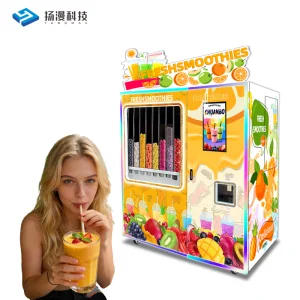
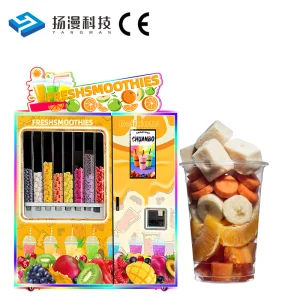
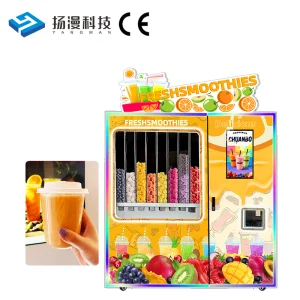
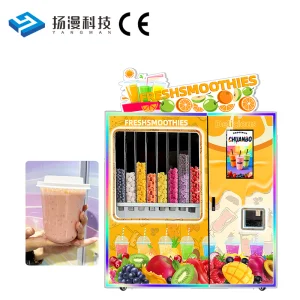
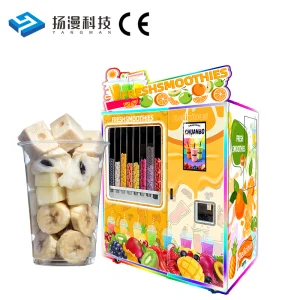
Cold brew is marketed as a natural pre-workout. Factories are now integrating protein-shot modules and smoothie-vending capabilities into cold brew bases to serve the fitness demographic.
In the landscape of "Semantic Search," users searching for *China Cold Brew Coffee Maker Manufacturers* are not just looking for a price list. They are looking for technical partnership, risk mitigation, and "Information Gain." Our approach to manufacturing centers on three pillars: Data-Driven Extraction, Supply Chain Transparency, and User-Centric Design.
By choosing a factory that understands the nuances of the "Third Wave Coffee" movement and the "Fourth Industrial Revolution," businesses can ensure their equipment is not obsolete in two years. From high-pressure cold brew systems to integrated vending kiosks that serve fresh smoothies and nitrogen coffee, the versatility of our production lines is designed to scale with your ambition. Whether you are a distributor in Singapore or a retail giant in the Netherlands, our SDK-integrated, cloud-managed systems provide the reliability you need to thrive in the automated beverage era.