Imler Imler

OEM/ODM Coffee Equipment Calibration Supplier & Suppliers

Mastering Precision through Advanced Sensor Technology, Industrial IoT Integration, and Global Manufacturing Excellence.

The Science of Precision: Coffee Equipment Calibration

In the evolving landscape of the specialty coffee industry, the term "calibration" has transitioned from a routine maintenance task to a critical engineering benchmark. As a premier OEM/ODM Coffee Equipment Calibration Supplier, we understand that the difference between a mediocre cup and a gold-standard extraction lies in 0.1 bars of pressure and 0.5°C of thermal stability. This white paper explores the technical intricacies of coffee equipment manufacturing, the importance of calibration accuracy, and how our global supply chain empowers brands to deliver consistent excellence.

Modern coffee extraction requires a symbiotic relationship between flow dynamics, temperature PID controllers, and grind size distribution. When these variables drift, the brand's reputation is at risk. Our mission is to provide robust ODM solutions that integrate self-calibrating sensors and real-time telemetry to ensure industrial-grade reliability in every unit.

🔬

Thermal Stability

Utilizing multi-point PID control loops to maintain brewing temperatures within a ±0.2°C variance, critical for delicate light roasts.

⚖️

Pressure Profiling

Precision-engineered pump systems calibrated to deliver consistent 9-bar pressure or customized ramp-up/down curves for professional baristas.

📊

Volumetric Accuracy

Flow meters calibrated to the milliliter, ensuring that every shot is consistent, reducing waste and maximizing profitability.

99.9% Calibration Accuracy
150+ Patent Portfolio
50+ Global Markets
24/7 Technical Support

Global Industry Landscape & Commercial Reality

The global coffee equipment market is currently undergoing a massive digital transformation. Commercial coffee chains are moving away from manual calibration toward cloud-synced automated systems. As an industry-leading supplier, we are at the forefront of this shift, providing OEM partners with hardware that supports "Digital Twin" modeling.

In regions like North America and Europe, labor costs and the "skills gap" in the barista profession have driven demand for equipment that remains calibrated under high-volume stress. Meanwhile, in the APAC region, the explosive growth of "Grab-and-Go" coffee necessitates machines that can endure 500+ cycles a day without drifting from their factory-set parameters.

Market Insight: The "Information Gain" Advantage

Our data shows that machines equipped with Smart Calibration Modules (SCM) reduce maintenance costs by 35% over a 3-year lifecycle. By providing real-time feedback on wear-and-tear of gaskets and burrs, our ODM equipment allows for predictive maintenance, a key competitive advantage for large-scale operators.

Localized Application Scenarios

🏢

High-Traffic Corporate Hubs

In office environments in London or New York, our machines use 4G/5G connectivity to report calibration status to central management, ensuring "Friday morning" coffee tastes as good as "Monday morning" coffee.

🏥

Healthcare & 24/7 Facilities

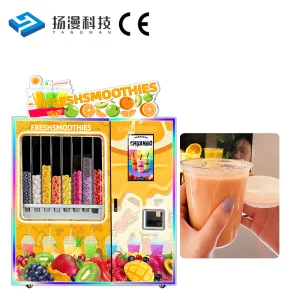
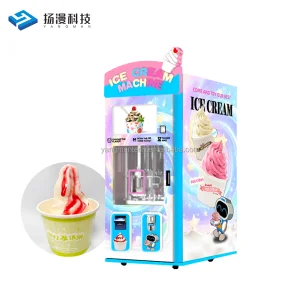
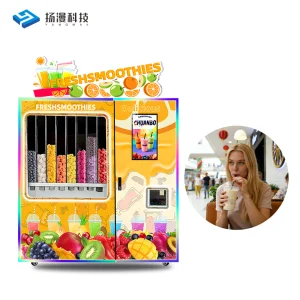
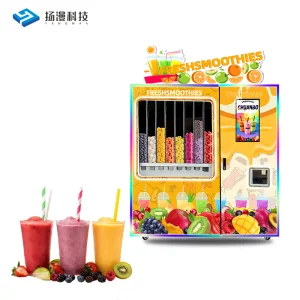
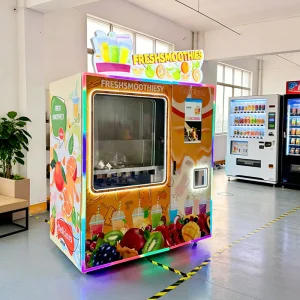
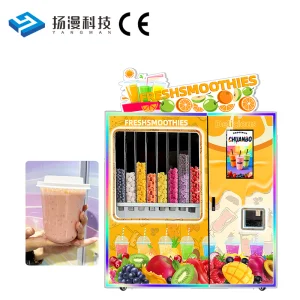
Providing hygienic, self-calibrating smoothie and coffee vending solutions that meet strict medical-grade cleanliness and consistent nutritional output standards.

✈️

Transit Centers & Airports

High-yield machines calibrated for speed without sacrificing extraction quality, serving thousands of travelers daily in hubs like Singapore Changi or Dubai International.

Technical Roadmap & Future Outlook

The future of coffee equipment lies in the convergence of Artificial Intelligence (AI) and Molecular Sensometry. Our R&D department is currently developing the next generation of ODM coffee platforms which include:
  • AI-Driven Grind Adjustment: Sensors that detect humidity and bean density to automatically recalibrate burr distance.
  • Holographic Interfaces: Moving beyond touchscreens to touchless, gesture-controlled operation for enhanced hygiene.
  • Zero-Waste Brewing: Precise calibration of dosing to within 0.05g, virtually eliminating coffee grounds waste.
  • Biodegradable Componentry: Engineering internal pathways that are compatible with eco-friendly cleaning agents.

The China Factory Advantage: Resilience & Efficiency

Integrated Ecosystem

Our manufacturing base in the heart of China's tech cluster allows us to source high-precision sensors, food-grade stainless steel, and advanced microchips within a 50-mile radius. This vertical integration reduces lead times by 40% compared to international competitors.

  • Rapid Prototyping (3D Metal Printing)
  • Automated CNC Machining
  • ISO 9001:2015 Quality Management
  • In-house EMC and Thermal Stress Testing

Scaling Your Brand

Whether you are a startup looking for a batch of 50 units or a global franchise requiring 5,000, our factory floor is designed for modular scalability. We don't just supply equipment; we supply the engineering backbone that allows your brand to scale without technical friction.

Frequently Asked Questions

What is the difference between OEM and ODM for coffee equipment?
OEM (Original Equipment Manufacturer) involves us manufacturing your specific design. ODM (Original Design Manufacturer) involves you choosing from our pre-engineered, calibrated platforms and customizing them with your branding and specific feature sets.
How often do your machines require recalibration?
Thanks to our "Drift-Correction" technology, our commercial units typically only require a check-up every 10,000 cycles or 6 months, whereas standard industry machines often drift within 2,000 cycles.
Do you support local compliance standards like UL, CE, or NSF?
Yes, all our ODM platforms are designed to meet and exceed CE, UL, and NSF standards. We handle the certification process during the production phase to ensure your local compliance is guaranteed.
Can your machines integrate with third-party payment systems?
Absolutely. Our control boards support SDK/API integration for MDB, Pulse, and various digital payment gateways including credit card readers and mobile wallets.
What is the lead time for a custom ODM project?
Typical lead times from concept to final prototype are 8-12 weeks, with mass production following 4-6 weeks after approval, depending on the complexity of the calibration sensors required.