Imler
Imler
Imler
Imler
Direct supply from state-of-the-art Chinese manufacturing facilities. Fully customizable OEM/ODM hardware solutions.
Across the globe, the intersection of robotic automation, artificial intelligence, and the culinary arts is undergoing a massive transformation. Driven by systemic labor shortages, rising real estate costs, and consumers' demands for hyper-convenience, the deployment of robotic coffee machines and smart food vending terminals has transitioned from a high-tech novelty to a core infrastructure play for commercial operators.
Chinese factories are at the absolute epicenter of this revolution. Leveraging the world’s most integrated supply chains, precision engineering ecosystems, and rapid technological prototyping capabilities, Chinese factories design and manufacture next-generation robotic barista systems, automatic smoothie blenders, and customized confection kiosks that set the benchmark for global operations. This whitepaper analyzes the market forces, industrial capabilities, and procurement guidelines essential for B2B buyers looking to wholesale or customize robotic vending platforms.
Exploring how autonomous vending, robotic coffee machines, and instant cold/hot confection services are redefining commercial real estate yield.
Hospitality and beverage businesses are facing an unprecedented labor deficit. Robotic baristas and automatic ice cream systems handle tedious prep tasks, freeing up human managers to focus on multi-site operations, maintenance, and logistics.
Precision calibration of ingredient ratios (water temperature, grinding pressure, blend duration, syrup volume) ensures that every customer receives the exact same high-quality taste profile, regardless of the time or location.
A typical robotic coffee shop or smoothie kiosk occupies less than 2-4 square meters. This tiny footprint enables deployment in premium real estate zones (airports, subways, corporate headquarters) where traditional storefronts are economically unviable.
A breakdown of the engineering prowess, scaling speed, and cost structures that make Chinese factories the industry leaders.
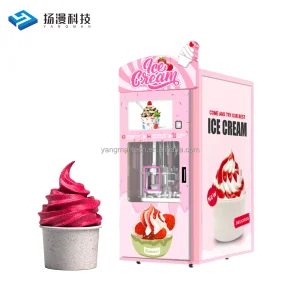
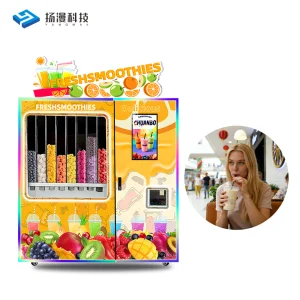
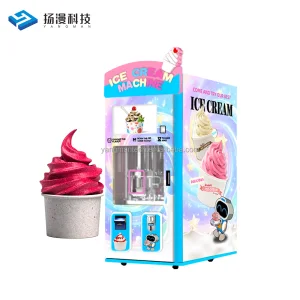
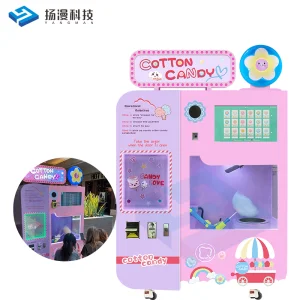
When selecting an OEM/ODM manufacturer for robotic coffee machines, automated beverage systems, or specialty food vending kiosks (such as cotton candy, ice cream, and fresh smoothies), the industrial cluster effects of Chinese manufacturing offer incomparable strategic advantages:
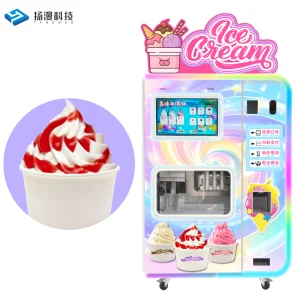
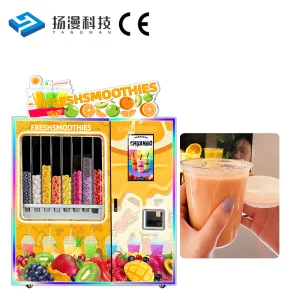
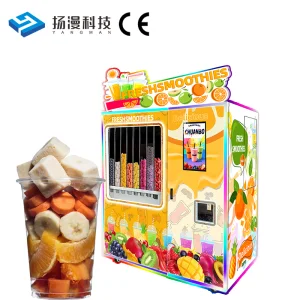
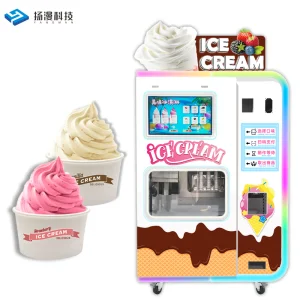
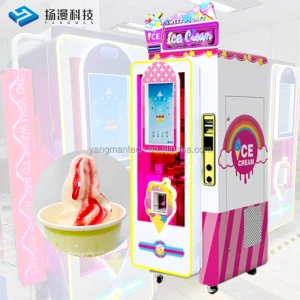
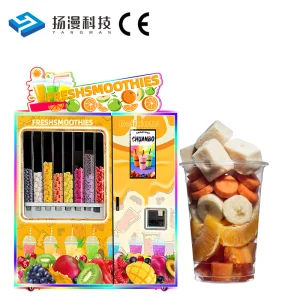
With massive R&D teams consisting of hardware engineers, roboticists, IoT developers, and software UI programmers, Chinese factories cut the traditional product development cycle from 24 months down to 6 months. Whether you want to customize an autonomous smoothie vending machine with interactive 32-inch touchscreens or build a dual-flavor soft-serve ice cream robot, these factories can quickly fabricate prototypes, test compliance, and scale up to high-volume assembly lines.
Inside the engineering framework of modern robotic cafes and automatic beverage dispensers.
Industrial-grade multi-axis robotic arms or high-accuracy cartesian gantry systems ensure stable handling of cups, lids, cups movement, and syrup dispensing.
Real-time inventory levels, component diagnostics, heat-map sales metrics, and error triggers are relayed via secure IoT APIs directly to your operator dashboard.
Automated Clean-in-Place (CIP) systems run internal sanitization cycles using high-temperature water jetting and cleaning agents, maintaining stringent hygiene logs.
Deploying automated retail devices in diverse spaces to maximize foot-traffic monetization.
Provide passengers with rapid-dispense hot coffee, visual cotton candy, or refreshing smoothies. 24/7 autonomous service caters to travelers catching red-eye flights when standard retail is closed.
Boost staff retention and campus satisfaction by offering smart vending terminals and coffee robots. Fully compatible with corporate badge employee card credits and contactless systems.
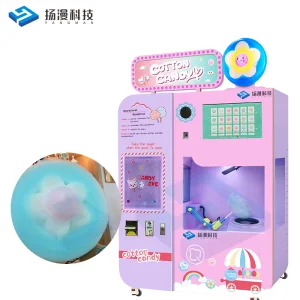
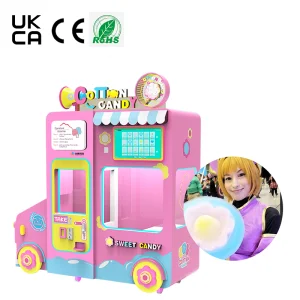
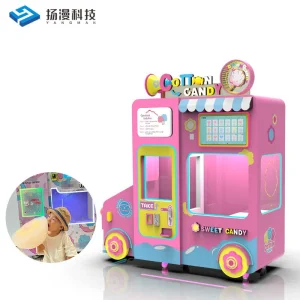
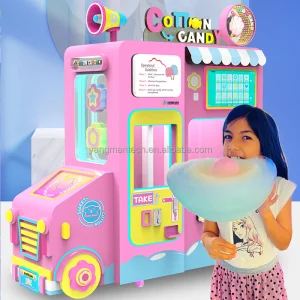
Turn confectionery into entertainment. Visual-heavy machines (like flower-making cotton candy machines or clear-window smoothie blenders) attract children and families, driving high impulse purchases.
Procuring complex robotic machinery from China requires attention to technical details, supply arrangements, and regulatory standards. For global buyers, these criteria are critical to vetting a wholesale partner:
When negotiating wholesale contracts, make sure the manufacturer guarantees:
Critical business, logistics, and technical answers for global buyers seeking to import smart vending machines.
For standard models, the typical factory production time is 15 to 25 business days. Highly customized OEM orders—which involve custom outer decals, proprietary UI configurations, or specific payment system hardware integrations—may require 35 to 50 days from engineering sign-off to final container loading.
Yes, most modern Chinese vending platforms are designed around standardized industry communication standards (like MDB). The factories integrate international payment reader systems such as Nayax, Pax, or Ingenico, enabling support for Visa, Mastercard, Apple Pay, Google Pay, and contactless cards globally.
For dairy or fruit juice systems (such as ice cream and smoothie machines), the machines feature scheduled, high-temperature Clean-in-Place (CIP) cleaning cycles. The software can be programmed to run these cycles during off-peak hours (e.g., at 3:00 AM) to maintain compliance with regional health departments.
Absolutely. The control computers in these units typically run Android or Windows IoT. Chinese OEM/ODM factories can provide API and SDK packages, allowing your software development team to deploy custom apps, branding elements, and transactional logic onto the main screen.
Leverage factory pricing on highly-scalable automated hardware to drive commercial ROI.