Imler
Imler
Imler
Imler
Explore our core manufacturing capabilities and diversified automated technologies.
The global coffee landscape has undergone a seismic shift, transitioning from simple caffeine consumption to a sophisticated "Third Wave" culture where precision and consistency are paramount. At the heart of this transition lies the coffee grinder—a critical tool that dictates the extraction quality, flavor profile, and commercial success of coffee enterprises. As the world's manufacturing hub, China's top coffee grinder manufacturers have evolved from OEM producers to global leaders in R&D, metallurgical innovation, and smart IoT integration.
Today, sourcing from China is no longer just about cost-efficiency; it is about accessing a highly integrated supply chain capable of producing professional-grade flat and conical burr grinders that rival European heritage brands. This white paper explores the technical milestones, procurement strategies, and macro-economic factors that define the current state of the coffee grinding industry in China, providing global buyers with the information gain necessary to make informed investment decisions.
Beyond the motor: The science of metallurgy and particle distribution.
Modern Chinese manufacturers utilize DLC (Diamond-Like Carbon) and titanium coatings to extend burr life by 300%, reducing heat friction and preserving volatile aromatic compounds during high-volume commercial service.
For specialty coffee shops, "stale" grounds in the chute are the enemy. Our latest technical route incorporates blow-out hoppers and anti-static ionizers to achieve near-zero retention (less than 0.1g).
Moving beyond preset clicks, top-tier suppliers offer stepless micrometric adjustment systems, allowing baristas to dial in espresso with micron-level accuracy for perfect extraction timing.
Integrating AI-driven sensors that detect bean density and automatically calibrate grind size to maintain a consistent flow rate, a revolution for chain coffee shops seeking standardized quality.
Dual-fan cooling systems and decoupled motor housings ensure that even during rush hours, the internal temperature remains below 40°C, preventing the "cooking" of beans before they reach the portafilter.
Utilizing high-torque brushless DC motors and acoustic damping chambers to reduce noise levels to below 60dB, enhancing the customer experience in boutique cafe environments.
For global distributors and coffee brand owners, the "search intent" for a China Coffee Grinder Manufacturer is multifaceted. It’s not just about the hardware; it’s about Reliability, Scalability, and Compliance. A top-tier supplier must demonstrate:
The boundary between commercial and home equipment is blurring. High-end home users now demand commercial-grade 64mm and 83mm burrs, leading to a surge in compact but powerful "prosumer" grinders.
Eco-conscious sourcing is driving the demand for modular designs where motors and electronics can be easily serviced rather than replaced, reducing electronic waste (E-waste).
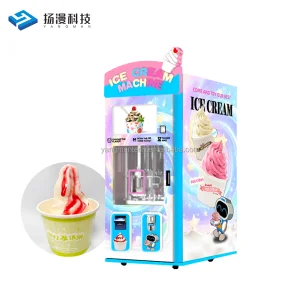
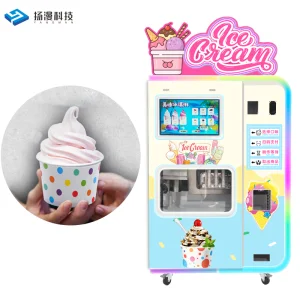
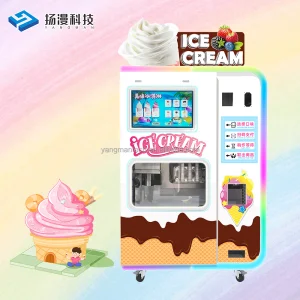
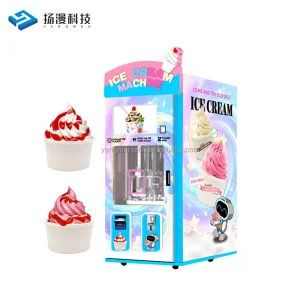
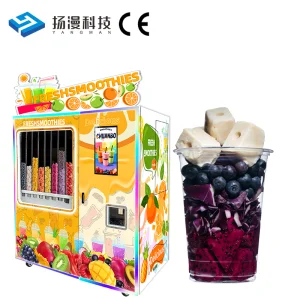
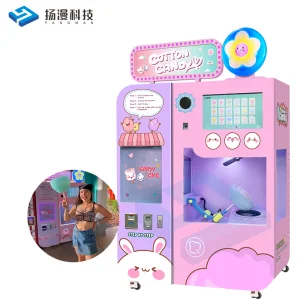
Coffee grinders are increasingly being integrated into larger automated vending ecosystems—like the Ice Cream and Beverage Vending Robots showcased in our catalog—where the grinder serves as the precision engine for high-quality automated service.
By 2028, the smart coffee grinder market in Asia is expected to grow at a CAGR of 8.4%, driven by the rapid expansion of coffee chains in China, Vietnam, and Indonesia. Manufacturers who focus on data-driven grinding (weight-based dosing) will capture the largest market share.
Integrating precision processing with intelligent self-service technology.