 Imler
Imler
The 2026 coffee market is becoming more varied, practical, and difficult to compare. Global buyers now face many Coffee Brewer types, from compact pour-over devices to automated espresso machines.
Each brewer creates a different experience. A French press offers a fuller body and simple maintenance. Pour-over systems provide control over water flow and extraction time. Drip machines suit offices, hotels, and busy households. Espresso brewers deliver concentrated coffee but require finer settings, stronger pumps, and regular cleaning. Capsule models save time, although waste and long-term operating costs deserve closer attention.
“Great coffee is about understanding the variables,” says James Hoffmann, World Barista Champion, author, and respected coffee educator. His view remains useful for buyers comparing equipment across different markets.
The right Coffee Brewer depends on more than taste. Buyers should examine capacity, heating stability, material quality, energy use, spare-part access, and local service support. A machine may look impressive but perform poorly without reliable maintenance. Small details matter. Think about a crowded breakfast counter, a 12-cup carafe, or a café facing constant peak-hour demand.
This guide reviews the leading brewer categories for global purchasing decisions in 2026. It considers performance, usability, cost, and expected business conditions. Some comparisons remain imperfect, because water quality and user habits change by region. That limitation deserves attention. A brewer that excels in Milan may not suit a hotel in Manila or a home in Toronto. The best choice is rarely the most expensive one.
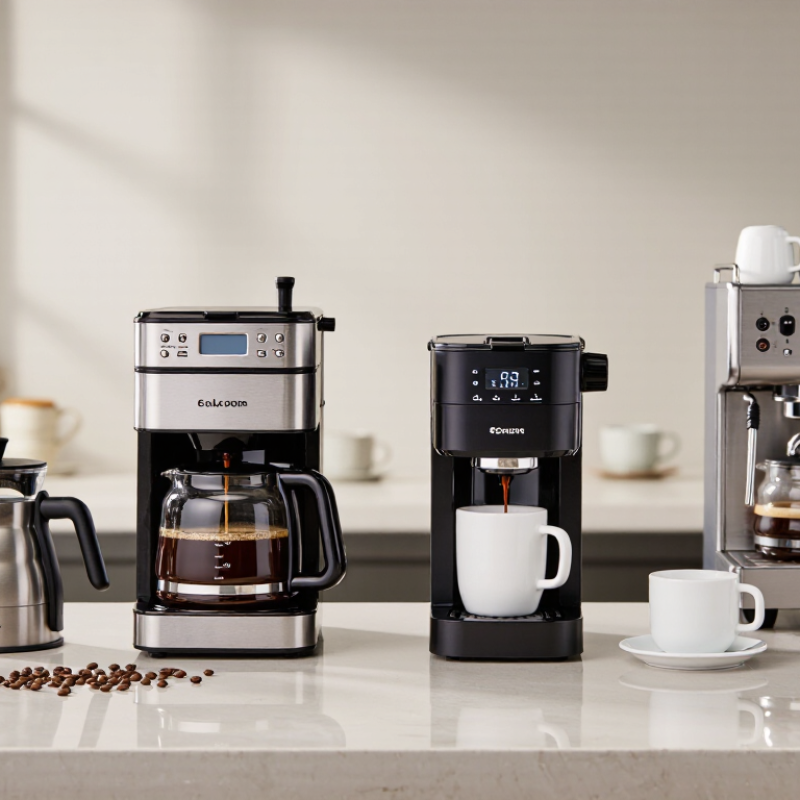
2026 Top Coffee Brewer Types for Global Buyers
Coffee Brewer Types and Their Core Brewing Principles in 2026
Global buyers are comparing brewers by extraction control, energy use, and daily capacity. The International Coffee Organization reported global coffee consumption near 177 million 60-kilogram bags in 2023/24. That scale makes reliable brewing principles more important than fashionable designs. Drip brewers use percolation. Heated water passes through ground coffee and a paper or metal filter. They suit offices, hotels, and busy homes. Batch consistency remains their main strength.
Immersion brewers hold coffee and water together for a fixed period. This method often creates a fuller body because more soluble compounds remain in contact with water. Pressurized brewers force water through a compact coffee bed. They can produce concentrated drinks, but grind size and pressure must stay stable. The Specialty Coffee Association’s brewing guidance emphasizes controlled time, temperature, and water quality. Buyers should not treat these factors as minor details. A beautiful machine can still produce a flat cup.
Tips: Test each brewer with the same coffee, water, and dose. Record brewing time and liquid weight. The National Coffee Association’s 2024 report found that 67% of American adults had coffee in the past day, showing strong demand for convenient equipment. However, convenience may hide maintenance problems. Some automatic systems waste water during cleaning, while manual devices require more training. Buyers should compare service access, replacement parts, and actual energy consumption. The “best” brewer is still a moving target.
| Brewer Type | Core Brewing Principle | Typical Water Temperature | Typical Brew Time | Recommended Grind | Typical Coffee-to-Water Ratio | Cup Characteristics | Main Buyer Advantages | Key Limitations |
|---|---|---|---|---|---|---|---|---|
| Automatic Drip Brewer | Heated water is distributed over ground coffee and passes through a paper or reusable filter by gravity. | Approximately 92–96°C | 4–8 minutes | Medium | About 1:15–1:18 | Clean, balanced, and consistent; paper filters reduce sediment and oils. | Convenient for households, offices, hospitality, and batch brewing. | Less manual control; performance depends on spray pattern, temperature stability, and filter design. |
| Pour-Over Brewer | The user manually pours water over coffee in controlled pulses while gravity draws the brew through a filter. | Approximately 90–96°C | 2.5–4 minutes | Medium-fine to medium | About 1:15–1:17 | Bright, aromatic, and clearly defined; flavor varies with pouring technique. | Low equipment complexity, strong brew control, and good suitability for specialty coffee. | Requires practice, a suitable kettle, and attention during brewing. |
| French Press | Ground coffee is fully immersed in water, then separated with a metal mesh plunger. | Approximately 92–96°C | 4–5 minutes | Coarse | About 1:15–1:17 | Full-bodied, rich, and textured because more oils and fine particles remain. | Affordable, reusable, portable, and easy to operate without electricity. | More sediment in the cup; glass models can be fragile and heat retention may vary. |
| Espresso Brewer | Pressurized hot water is forced through a compact bed of finely ground coffee to produce a concentrated beverage. | Approximately 90–96°C | Approximately 20–35 seconds for extraction | Fine | Commonly about 1:2 brewed beverage-to-dry coffee by mass | Highly concentrated, intense, and capable of producing crema when conditions are suitable. | Fast service, concentrated flavor, and a foundation for milk-based beverages. | Higher equipment cost, finer adjustment requirements, and regular cleaning needs. |
| Moka Pot | Steam pressure generated in the lower chamber pushes hot water through coffee and into an upper chamber. | Typically below boiling at the coffee bed; varies by heat source and design | 4–7 minutes | Medium-fine | Usually filled to the filter basket; water chamber filled to below the safety valve | Strong, concentrated, and heavier than drip coffee, but not equivalent to espresso. | Durable, compact, economical, and suitable for stovetop or compatible heating surfaces. | Can taste bitter if overheated; requires careful handling of hot metal components. |
| Aero-Press Style Immersion Brewer | Coffee is steeped briefly, then pushed through a paper or metal filter using gentle manual pressure. | Approximately 80–96°C, depending on recipe | 1–3 minutes | Medium-fine to medium | Commonly about 1:12–1:17 | Clean yet full-flavored, with flexible strength and extraction options. | Lightweight, fast, portable, and adaptable to different recipes and serving sizes. | Usually limited batch capacity; disposable paper filters may be needed unless a reusable filter is used. |
| Siphon Brewer | Vapor pressure moves water between chambers, followed by vacuum-assisted filtration as the heat source is removed. | Approximately 90–96°C | 4–7 minutes | Medium-fine to medium | About 1:15–1:17 | Clear, aromatic, and smooth, with strong visual presentation. | Distinctive brewing experience for cafés, tasting rooms, and presentation-focused buyers. | More fragile, less portable, slower to set up, and more demanding to clean. |
| Cold-Brew Brewer | Coarse coffee is extracted with cool or room-temperature water over an extended period, usually by immersion or slow dripping. | Approximately 4–25°C | 8–24 hours | Coarse | About 1:5–1:8 for concentrate or 1:10–1:15 for ready-to-drink coffee | Smooth, low-acidity perception, and suitable for chilled service. | Well suited to advance preparation, cold beverages, cafés, and warm-climate markets. | Long preparation time, substantial refrigerator capacity, and strict storage hygiene requirements. |
| Single-Serve Capsule Brewer | A pre-portioned coffee capsule is pierced, wetted, and brewed through a controlled flow path. | Typically approximately 85–96°C, depending on system design | Less than 1–2 minutes | Pre-ground and pre-portioned | Determined by capsule fill weight and programmed water volume | Consistent, convenient, and available in a range of programmed beverage styles. | Fast operation, simple portion control, and low user skill requirements. | Ongoing capsule cost, packaging waste considerations, and dependence on compatible capsule formats. |
| Turkish-Style Coffee Pot | Very finely ground coffee is heated together with water, often with sugar, without filtration. | Heated close to simmering; boiling is generally avoided during final preparation | 3–5 minutes per serving | Extra-fine, powder-like | Commonly about 1:8–1:10 | Intense, thick, aromatic, and unfiltered, with settled grounds at the bottom. | Very low equipment cost, small serving size, and strong cultural suitability in relevant markets. | Requires specialized fine grinding and careful heat control; sediment remains in the cup. |
Note: Temperature, time, grind size, and ratio are practical reference ranges. Final results vary with coffee origin, roast level, water chemistry, filter geometry, equipment design, and user technique.
Common types include drip, pour-over, batch, immersion, pressurized, capsule, espresso, and stovetop brewers. Each uses different control methods. Performance depends on time, temperature, water, and grind size.
Drip and batch brewers suit busy workplaces and hospitality settings. They provide consistent cups with limited training. Check capacity, brewing time, filter supply, cleaning access, and local voltage.
Pour-over brewing gives users more control over pouring speed, water volume, and contact time. It can highlight differences between coffee origins. However, results may vary between operators. Training matters.
Water quality affects flavor clarity and equipment life. Mineral-heavy water may create deposits inside heating systems. Test the brewer with local water and normal serving conditions.
Check pump stability, temperature control, grind requirements, and replacement seals. Stable pressure is important for concentrated coffee. Small changes matter.
Capsule brewers offer fast preparation and consistent portions. Their practicality depends on regional capsule supply and cost. Buyers should also review waste collection options and storage space.
Stovetop brewers work well where electricity is costly or unreliable. They are compact and simple to maintain. Induction cooking requires a magnetic-compatible base.
Compare energy use, water waste, filters, cleaning time, repairs, and replacement parts. A low purchase price can hide higher daily costs. I may overvalue the initial invoice.
Use the same coffee, water, dose, and serving conditions. Record brewing time, liquid weight, temperature, waste, and cleaning effort. Staff feedback matters too. Controls can confuse people.
In 2026, Coffee Brewer choices are shaped by brewing principles, user habits, budget, and local conditions. Drip and batch brewers are practical for preparing multiple cups, while pour-over methods offer greater control over water flow, temperature, and extraction. Espresso, capsule, and stovetop brewers serve different preferences, ranging from concentrated coffee and convenience to traditional preparation. Each type has its own strengths in terms of flavor, speed, maintenance, and operating cost.
Coffee Brewers can also be compared by their level of automation. Manual models provide hands-on control and portability, automatic machines simplify daily preparation, and smart systems may add programmable settings and monitoring functions. Global buyers should consider household or commercial use, available counter space, power compatibility, water quality, cleaning requirements, supply costs, and local purchasing conditions. The best choice is a balanced solution that matches expected volume, preferred taste, desired convenience, and long-term value.
