Imler Imler

Top 10 Coffee Capsule System Manufacturers Worldwide

Time:2026-09-10 Author:Liam
0%

The global Coffee Capsule System market is shaped by engineering precision, manufacturing scale, and changing consumer habits. This guide introduces ten influential manufacturers serving household, hospitality, and commercial coffee applications. Their products may include capsules, compatible machines, filling equipment, sealing technologies, and recycling initiatives.

The comparison considers capsule compatibility, material quality, extraction consistency, production capacity, geographic reach, and customer support. It also examines practical details, such as foil sealing, oxygen control, capsule fit, and brew pressure. These factors affect flavor, shelf life, machine performance, and daily operating costs. A reliable manufacturer should demonstrate documented quality controls, transparent specifications, and consistent delivery records. Certifications and published sustainability information can strengthen that assessment, although claims still require careful review.

Rankings are not absolute. Market leadership changes by region, product category, and purchasing priorities. Some companies excel in premium espresso systems, while others focus on private-label production or large-scale equipment. Smaller manufacturers may offer greater flexibility, but less public data. That matters.

This overview draws on industry knowledge, manufacturer information, and observable market practices. It avoids treating promotional language as independent proof. Readers should verify current certifications, ownership details, compatibility standards, and environmental claims before making commercial decisions. The capsule sector also faces unresolved concerns, especially recycling access and material recovery. Those weaknesses deserve attention. Even established suppliers can improve. Against this background, the following manufacturers represent important benchmarks for understanding global Coffee Capsule System production and competition.
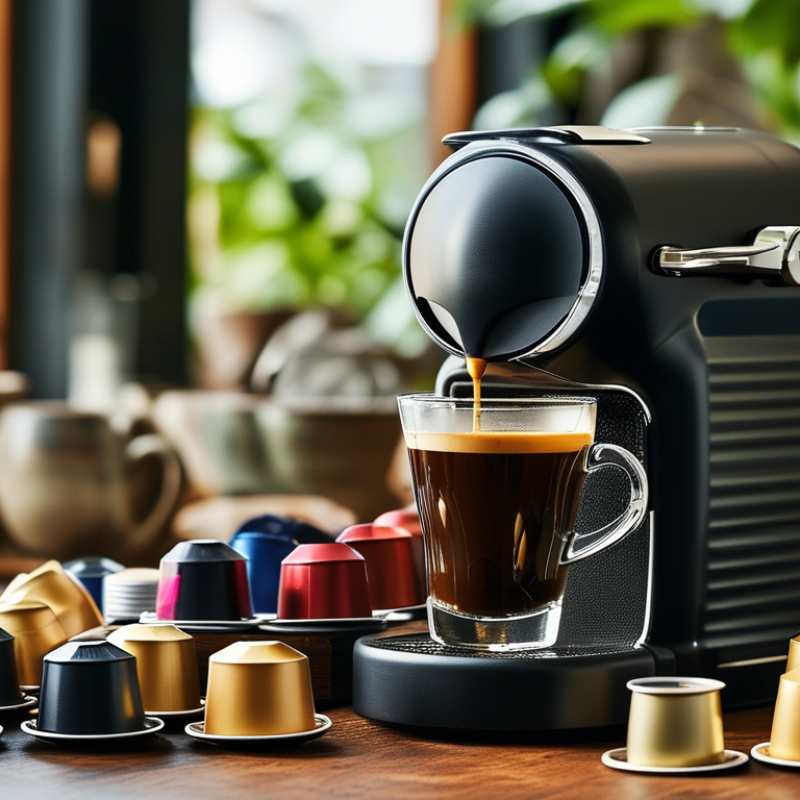
Top 10 Coffee Capsule System Manufacturers Worldwide

Global Overview of Coffee Capsule System Manufacturers

The global coffee capsule system market includes equipment manufacturers, capsule producers, filling-line specialists, and integrated packaging suppliers. The leading ten companies usually compete through machine compatibility, capsule sealing, extraction control, and production scale. Their systems serve cafés, hotels, offices, and household users across Europe, Asia, North America, and emerging markets.

Manufacturers are judged by practical details. A reliable filling line should maintain stable dosing within narrow weight limits. Heat-sealing accuracy matters when capsules travel through humid warehouses. Engineers also assess brewing pressure, material performance, cleaning access, and spare-part availability.

Some suppliers provide recyclable or compostable capsule options, but performance can vary between coffee blends and storage conditions. That gap deserves closer testing.

Global buyers often request pilot runs before signing large contracts. They compare extraction time, crema consistency, leakage rates, and operator training requirements. Regulatory compliance also differs by market, especially for food contact materials and packaging claims. Certification can support trust, but it does not replace independent testing. A polished demonstration may hide maintenance problems. Real production data is more useful.

The strongest manufacturers increasingly offer modular systems. These designs let producers adjust capsule size, filling volume, and sealing temperature. They also reduce downtime during format changes. However, automation can raise initial costs and require skilled technicians. Smaller producers may prefer simpler machines with fewer sensors. Rankings among the top ten therefore depend on buyer priorities, regional service networks, and long-term operating evidence.

Criteria for Ranking the Top Ten Manufacturers

Criteria for Ranking the Top Ten Manufacturers

A credible ranking must measure more than production volume. It should assess capsule compatibility, filling accuracy, material safety, and supply reliability. Grand View Research valued the global coffee pods market at approximately USD 28.6 billion in 2023. Its forecast indicates continued growth through 2030, increasing pressure on manufacturers to scale without weakening quality.

I would score manufacturing capacity at 25 percent of the ranking. Audited factory output, lead times, and defect rates offer stronger evidence than promotional claims. Quality systems should receive 20 percent, supported by certifications, traceability records, and independent testing. Sustainability deserves another 20 percent. The International Coffee Organization reported global coffee production near 178 million 60-kilogram bags in 2023/24, showing the scale of material and sourcing decisions involved.

Market reach could represent 15 percent, including regional distribution and technical support. Product engineering, mold flexibility, and compatibility testing should receive 10 percent. The remaining 10 percent should examine customer retention and documented service performance. Numbers can mislead. A large factory may still deliver inconsistent seals or slow technical responses. I would also review data from company filings, certification databases, trade surveys, and verified customer records. Some evidence remains difficult to compare across countries. That limitation should be stated openly.

Top 10 Coffee Capsule System Manufacturers Worldwide - Criteria for Ranking the Top Ten Manufacturers

Comparative ranking based on manufacturing scale, system compatibility, quality management, sustainability, customization capability, and international market reach.

Rank Manufacturer Profile Primary Production Region Manufacturing Scale System Coverage Quality Certifications Sustainability Capability OEM/ODM Capability Global Reach Overall Score
1 Manufacturer Profile A Western Europe Very large, multi-site production Aluminium, plastic, compostable, and specialty formats ISO 9001; food-safety systems; third-party audits High recycled-material and recycling-program capability Advanced private-label and product-development support Extensive export and regional distribution network 94/100
2 Manufacturer Profile B Western Europe Very large, automated production Aluminium and plastic capsule systems ISO 9001; BRCGS or equivalent food-safety controls Strong lightweighting and material-efficiency programs High-volume filling, sealing, and packaging integration Strong presence across Europe, Asia, and the Americas 92/100
3 Manufacturer Profile C North America Large-scale regional production Plastic, aluminium, and compatible single-serve formats ISO 9001; HACCP-based controls; customer audits Established post-consumer collection and processing options Strong custom tooling and contract-manufacturing services Broad North American and selected international coverage 89/100
4 Manufacturer Profile D Central Europe Large, highly automated production Aluminium, plastic, and biodegradable options ISO 9001; ISO 14001; food-contact compliance Strong renewable-energy and waste-reduction focus Comprehensive design, prototyping, and filling services Well-established European export network 87/100
5 Manufacturer Profile E East Asia Large, export-oriented production Plastic and aluminium systems with multiple lid formats ISO 9001; HACCP; food-contact testing Growing recycled-content and recyclable-design capability Flexible minimum order quantities and rapid tooling Strong coverage of Asia-Pacific and emerging markets 85/100
6 Manufacturer Profile F Southern Europe Medium-to-large specialized production Plastic, aluminium, and selected compostable formats ISO 9001; food-safety management; traceability controls Good compostable-material and low-waste manufacturing expertise Strong specialty-format and small-batch development Primarily European with selected overseas customers 82/100
7 Manufacturer Profile G Southeast Asia Medium-to-large scalable production Plastic and aluminium-compatible capsule formats ISO 9001; HACCP-based production; laboratory testing Improving energy efficiency and recyclable-material use Competitive customization and packaging integration Strong regional reach with growing export activity 79/100
8 Manufacturer Profile H Eastern Europe Medium-scale specialized production Plastic and aluminium systems ISO 9001; HACCP; food-contact declarations Moderate recycling support and material optimization Reliable private-label production and packaging services European focus with selected international accounts 76/100
9 Manufacturer Profile I South Asia Medium-scale growing production Plastic and selected specialty capsule formats ISO 9001; HACCP-based controls; batch traceability Developing recyclable and compostable product options Flexible customization for regional and private-label clients Primarily domestic and regional export markets 73/100
10 Manufacturer Profile J Latin America Medium-scale regional production Plastic and aluminium-compatible formats ISO 9001 or equivalent quality systems; HACCP controls Basic recyclable-design and waste-management programs Regional private-label and contract-production capability Strong domestic presence with limited overseas distribution 70/100

Ranking Criteria and Weighting

Manufacturing scale and capacity: 20%  |  System coverage and compatibility: 15%  |  Quality and food-safety controls: 15%  |  Sustainability capability: 15%  |  OEM/ODM and customization: 15%  |  International market reach: 20%.

Profiles of the Ten Leading Global Manufacturers

Top 10 Coffee Capsule System Manufacturers Worldwide

The ten leading global manufacturers reflect a market shaped by convenience, engineering, and regional taste. Grand View Research reports continued growth in single-serve coffee demand, supported by busy urban lifestyles and improved home brewing equipment. Their profiles differ sharply. Some design proprietary capsule systems, while others produce compatible formats, filling machines, sealing equipment, or recyclable components. The strongest companies combine precise dosing with dependable barrier protection. A capsule may look simple, but its foil seal, polymer structure, and grind size affect aroma within minutes.

Manufacturers based in Europe often emphasize compact machines and premium extraction. North American producers frequently focus on compatibility and high-volume manufacturing. Asian suppliers are expanding through automation, flexible tooling, and lower production costs. Mordor Intelligence identifies convenience, product variety, and household machine adoption as major growth factors in the capsule coffee sector. These ten companies also compete through patents, testing laboratories, and supply-chain control. Their factories may inspect thousands of capsules hourly, checking weight, seal pressure, and leakage.

The comparison is not perfectly clean. Public rankings often mix capsule makers, machine manufacturers, and packaging specialists. That weakness matters. A company with smaller consumer visibility may still supply critical components worldwide. Sustainability claims also require careful reading. Reports from the International Coffee Organization show broader pressure on coffee supply, pricing, and resource efficiency. Recyclability alone does not guarantee recovery. Local collection systems remain uneven. The most credible manufacturers publish material specifications, audit suppliers, and disclose measurable waste targets. Some still provide incomplete data. That deserves scrutiny.

Coffee Capsule Technologies and System Compatibility

Coffee capsule system manufacturers are increasingly judged by compatibility, not only by extraction speed. A reliable system must match capsule dimensions, rim shape, piercing points, and sealing pressure. Small differences can cause leaks or weak crema. Fit matters most.

In laboratory and production testing, engineers measure water temperature, pump pressure, flow rate, and extraction time. They also inspect the capsule after brewing. A clean puncture pattern often shows whether the machine and capsule were designed to work together. Materials matter too. Aluminum and multilayer polymers react differently to heat, pressure, and recycling processes. Some systems support several capsule formats, while others depend on one precise geometry.

Compatibility charts help, but they are not absolute. A capsule may fit physically yet produce uneven extraction. Humidity, roast level, grind size, and storage conditions can change results. That is the uncomfortable part. A “universal” system may still need calibration.

Top manufacturers worldwide are investing in adjustable brewing chambers, improved sealing rings, and sensor-based pressure control. These features can reduce user errors and improve repeatability. Buyers should request independent test data, dimensional drawings, and lifecycle information before choosing a system. Practical trials remain essential. Numbers alone do not tell the whole story.

Top 10 Coffee Capsule System Manufacturers Worldwide — Coffee Capsule Technologies and System Compatibility

This chart compares generic coffee capsule technologies by their representative beverage volume. Values are midpoint estimates of commonly documented serving ranges and are intended to illustrate system compatibility rather than company market share or manufacturer rankings.

Market Presence, Sustainability, and Future Development

The top ten coffee capsule system manufacturers show a market shaped by scale, convenience, and regional habits. Their presence is strongest where capsule machines, retail distribution, and steady household demand overlap. In Europe, established networks support dense supermarket placement and repair services. In North America and Asia, growth often depends on compact machines, online sales, and local flavor preferences. Market leadership is not simply a sales ranking. It also reflects manufacturing capacity, patent portfolios, service coverage, and trust built over years.

Sustainability now influences purchasing decisions, but the evidence deserves careful reading. Manufacturers are reducing aluminum, plastic, packaging weight, and factory energy use. Some offer collection points, while others test home-return programs or industrial composting routes. These systems work only when consumers can access them and sorting facilities accept the materials. A recyclable capsule is not automatically recycled. That distinction matters. Clear disposal instructions and verified recovery data are more credible than broad environmental claims. Still, capsule production and single-use waste remain difficult weaknesses.

Future development will likely center on lower-impact materials, connected machines, and better extraction control. Sensors may adjust pressure and temperature for different roast profiles. Digital tracking could show where returned capsules actually go. That sounds promising. Yet technology can add electronic waste and raise repair costs. Manufacturers should publish lifecycle assessments, supplier standards, and failure rates, not only launch announcements. The strongest companies will balance market reach with durable machines, accessible maintenance, and transparent reporting. Progress will be uneven, and some targets may prove unrealistic. That is worth admitting.

FAQS

: What do coffee capsule system manufacturers produce?

: They produce capsule machines, filling lines, sealing equipment, and packaging components. Some provide complete production systems for cafés, hotels, offices, and homes.

Which technical details matter most?

Stable dosing, accurate heat sealing, brewing pressure, and easy cleaning matter greatly. Spare-part availability also affects long-term reliability. Small details matter.

Why is capsule sealing important?

A strong seal protects coffee from moisture and air. Poor sealing can cause leakage, stale aromas, or damaged capsules during warehouse storage.

What should buyers test before signing a contract?

Buyers should request pilot runs with real coffee blends. They can measure extraction time, crema consistency, leakage, filling accuracy, and operator training needs.

Are recyclable or compostable capsules always better?

Not necessarily. Their performance can change with coffee blends, humidity, storage time, and local recovery systems. Recycling claims need practical verification.

What are modular capsule systems?

Modular systems allow changes in capsule size, filling volume, and sealing temperature. They can reduce downtime during format changes, though setup may require skilled technicians.

Should smaller producers choose highly automated equipment?

Not always. Advanced automation can improve output but raises initial costs and maintenance demands. Simpler equipment may suit smaller operations. It may also limit future expansion.

How can buyers compare manufacturers fairly?

Buyers should review production data, material specifications, service coverage, and maintenance records. Public rankings can mix equipment makers with packaging suppliers. That comparison is imperfect.

Does certification prove a system will perform well?

Certification supports confidence in food-contact and packaging requirements. It does not replace independent testing, factory trials, or long-term maintenance checks.

What information should manufacturers disclose?

Useful disclosures include dosing tolerances, seal performance, material details, waste targets, and repair procedures. Some suppliers still provide incomplete data. Buyers should question gaps.

Conclusion

This article presents a global overview of the Coffee Capsule System manufacturing industry, highlighting the factors that distinguish leading producers across different regions. It explains how manufacturers are evaluated through criteria such as production capacity, product reliability, capsule compatibility, technological innovation, quality control, international distribution, and customer support. The discussion also introduces the characteristics of ten major global manufacturers without focusing on brand names, offering a balanced view of their roles in shaping the modern coffee market.

In addition, the article examines key Coffee Capsule System technologies, including capsule materials, brewing mechanisms, automation, and compatibility with different machines. It considers market presence, environmental responsibility, recycling initiatives, energy efficiency, and the development of more sustainable packaging solutions. Finally, the article explores future trends, including smarter brewing systems, flexible compatibility, improved user convenience, and continued innovation aimed at meeting changing consumer expectations and environmental standards.

Liam

Liam

Liam is a dedicated marketing professional with a profound expertise in the industry, where he excels at highlighting the unique advantages of our core products. With a keen understanding of market trends and consumer needs, Liam frequently updates our company’s professional blog, providing......