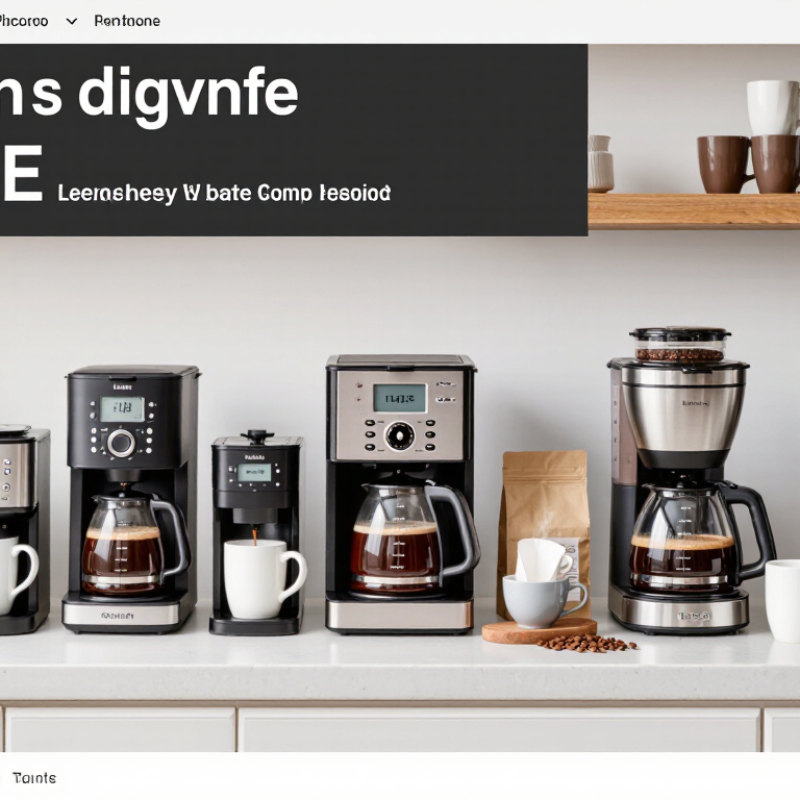
A Drip Coffee Maker can make a rushed morning feel calmer, but the right choice depends on how you brew. Some kitchens need a compact machine that fits beneath low cabinets. Others need a large carafe for a busy household. Small details matter. A clear water window, simple controls, and a removable filter basket can make daily use easier.
Coffee author James Hoffmann offers a useful reminder: “The best coffee is the coffee you like, the way you like to drink it.” That idea matters when comparing machines. A programmable timer may suit early risers, while adjustable brew strength may appeal to people who prefer a bolder cup. Brewing temperature, extraction consistency, carafe design, and cleanup also deserve attention. A low price can look attractive, but frequent fiddly cleaning may become tiresome.
This guide explores ten popular drip coffee makers and the features that distinguish them. It considers brewing performance, capacity, ease of use, and practical value, rather than relying on flashy specifications alone. A machine may produce a pleasant cup yet still take up too much counter space. Another may be convenient but offer few customization options. No single model fits every kitchen, and product rankings can shift as prices and availability change. Use the comparisons to narrow your choices, then check current product details before buying. The best pick is the one that suits your routine, budget, and taste—not merely the one with the longest feature list.
How Drip Coffee Makers Work and What Sets Them Apart
A drip coffee maker heats water and sends it over ground coffee, letting gravity pull the brewed liquid into a pot. Cold water rests in a reservoir, then a heating element warms it and moves it through a tube. At the top, a showerhead spreads water across the grounds. That small detail matters. Even coverage helps avoid dry patches and uneven extraction.
The coffee’s strength depends on more than the machine. Grind size, coffee-to-water ratio, and brew time all play a part. A finer grind exposes more surface area, but it can also slow water flow and make coffee taste harsh. A coarse grind may taste thin if water passes through too quickly. Fresh coffee helps, though freshness alone cannot fix a poor recipe.
What sets drip makers apart is how steadily they control heat and water flow. Some distribute water in broad, even streams; others release it in a few narrow spots. Thermal carafes keep coffee warm without a hot plate, while hot plates can gradually change its flavor. These differences are useful, but not always obvious from a quick glance at a machine. A simple test is to watch whether the grounds become evenly wet and taste a few brews with the same coffee and measurements. Small adjustments often matter more than extra settings.
Which Features Matter When Evaluating the Top Models
A 2024 National Coffee Association report found that 67% of U.S. adults drank coffee the previous day. That figure measures consumption, not machine preference, but it shows why reliable daily brewing matters. The Specialty Coffee Association’s Golden Cup Standard gives useful benchmarks: water at 92–96°C and a coffee-to-water ratio near 55 grams per liter. These are brewing targets, not a guarantee that every machine will produce the same cup. Still, they help compare temperature control and dose consistency.
Look for a machine that heats water evenly and wets the grounds across the basket. Small details count. A thermal carafe can keep coffee warm without a hot plate, while a removable reservoir makes refilling easier beside a crowded sink. A programmable timer helps on rushed mornings, though it cannot rescue stale grounds. I might be giving too much weight to extra settings; simple controls can be easier to use well. Check whether the brew basket is easy to clean, and whether the carafe pours without dripping. Specifications matter, but daily handling does too. Sources: National Coffee Association, 2024 National Coffee Data Trends; Specialty Coffee Association, Golden Cup Standard.
What Are the Top 10 Drip Coffee Makers?
Which features matter when evaluating the top models? This chart shows an editorial 100-point rubric for comparing drip coffee makers—not test results or a ranking of specific products.
Brewing performance receives the greatest weight. As a reference point, Specialty Coffee Association brewing guidance includes water temperatures of 92–96°C and a coffee-to-water ratio of about 55 g per litre (±10%).
The Top 10 Drip Coffee Makers and Their Standout Qualities
The best drip coffee makers stand out in different ways, not just by brewing quickly. A thermal-carafe model keeps coffee warm without a hot plate, which helps reduce that stewed taste. A programmable machine offers an early start; check whether its clock and controls are easy to set. A compact brewer fits a narrow counter, though its smaller water tank may need frequent refilling. Small, but capable.
A model with adjustable brew strength gives more control over a light or fuller cup. A showerhead-style water outlet can wet the grounds more evenly, while a pre-infusion setting briefly blooms them before the main brew. For households with different schedules, a dual-basket machine can brew separate pots. A single-serve drip brewer saves space and limits leftovers, but check that its serving size suits your mug. Details matter.
A brewer with a removable reservoir is easier to fill under a low cabinet. A model with a pause-and-pour feature lets someone take a cup mid-cycle, although spills are possible if the carafe is removed carelessly. Finally, a machine with a cleaning alert can make upkeep harder to forget; it cannot replace descaling. I would compare brew temperature, carafe design, and cleanup before choosing. A glossy display is pleasant, but it does not improve the coffee.
What Are the Top 10 Drip Coffee Makers? - The Top 10 Drip Coffee Makers and Their Standout Qualities
The entries below compare common drip coffee maker configurations rather than ranking specific branded models. Features and capacities vary by model.
| # |
Drip Coffee Maker Type |
Typical Capacity |
Standout Qualities |
A Good Fit For |
| 1 |
Programmable 12-cup brewer |
Up to 12 cups |
A timer can be set in advance, and a warming plate keeps brewed coffee hot for a limited period. |
Households that want a full pot ready in the morning. |
| 2 |
Thermal-carafe brewer |
About 8–12 cups |
An insulated carafe retains heat without relying on a continuously heated hot plate. |
People who sip coffee over an extended period. |
| 3 |
Compact 4-cup brewer |
About 4 cups |
A smaller footprint and pot size suit limited counter space and reduce leftover coffee. |
Individuals, couples, or small kitchens. |
| 4 |
Single-serve drip brewer |
One mug per cycle |
Brews directly into a cup or travel mug, often with adjustable serving sizes. |
People who usually make coffee one serving at a time. |
| 5 |
Pour-over-style automatic brewer |
About 8–10 cups |
A showerhead distributes water over the grounds to encourage more even wetting. |
Coffee drinkers who value balanced extraction from an automatic machine. |
| 6 |
Brew-strength-control brewer |
About 8–12 cups |
A strength setting changes the brewing cycle to produce a milder or more concentrated cup. |
Households with different taste preferences. |
| 7 |
Adjustable-temperature brewer |
About 8–12 cups |
Temperature controls let users adjust the water heat within the machine’s supported range. |
Enthusiasts who like to fine-tune brewing variables. |
| 8 |
Hot-water dispenser combination brewer |
Coffee pot plus on-demand hot water |
A separate hot-water function can be used for tea, instant drinks, or oatmeal. |
Kitchens where a second hot-water appliance would be inconvenient. |
| 9 |
Grind-and-brew drip machine |
About 8–12 cups |
An integrated grinder can grind whole beans shortly before brewing; the grinder requires regular cleaning. |
People who prefer freshly ground beans with fewer separate steps. |
| 10 |
Simple manual-switch brewer |
About 8–12 cups |
Straightforward controls and fewer electronic features make everyday operation simple. |
Buyers seeking a basic, uncomplicated coffee routine. |
How the Leading Models Compare in Price, Capacity, and Brewing
What Are the Top 10 Drip Coffee Makers?
Price, capacity, and brewing control reveal more than a feature list. For a fair ten-model comparison, group current street prices into under $60, $60–$150, and above $150; treat these as shopping bands, not fixed market averages. Prices change, and a higher price does not guarantee better coffee. Capacity needs equal care: a “12-cup” pot commonly refers to small coffee-maker servings, not twelve full mugs. Check the reservoir volume in fluid ounces before deciding. Small households may prefer a compact 4–8-cup machine, while a 10–12-cup model suits shared kitchens. Too much leftover coffee can taste stale.
Brewing quality has measurable benchmarks. The Specialty Coffee Association’s brewing guidance recommends roughly 55 grams of coffee per liter of water, with a tolerance of about 10%, and water temperatures around 92–96°C. Those figures help compare models with adjustable temperature or strength controls, though they do not guarantee a perfect cup. The National Coffee Association’s 2024 National Coffee Data Trends report found that 67% of U.S. adults had coffee in the past day. That makes daily ease relevant: look for a readable water window, simple cleaning, and a carafe that pours without dribbling. Small details matter. Still, a feature-rich machine can be fussy, and my own preference may not match yours. Compare brew time, batch size, and controls against how you actually drink coffee.
How to Choose and Maintain the Right Drip Coffee Maker
What Are the Top 10 Drip Coffee Makers?
How to Choose and Maintain the Right Drip Coffee Maker
Choose a machine that suits your daily routine, not just its feature list. A small household may prefer a compact brewer, while frequent guests make a larger carafe useful. Look for even water distribution, a removable filter basket, and a hot plate that does not scorch coffee. A thermal carafe can help preserve flavor without continuous heating. If you use a timer, check that its controls are simple enough for sleepy mornings.
The Specialty Coffee Association’s Golden Cup guidance recommends about 55 grams of coffee per liter of water, with a 10% tolerance. Its brewing targets include 1.15–1.35% dissolved coffee solids and an extraction yield of 18–22%. These figures offer a useful baseline, not a promise that every cup will taste perfect. Grind size, water, and freshness still matter. Rinse the basket after each brew, wash the carafe daily, and descale according to your water hardness and manual. Scale buildup can slow heating and affect brewing consistency.
Tips: Measure coffee and water for a few mornings; adjust the grind if the cup tastes weak or harsh. Unplug the machine before cleaning. Keep it simple. I still find that a little trial and error beats trusting preset buttons alone.
FAQS
It heats water in a reservoir, then sends it through a tube to a showerhead. Gravity pulls water through the grounds into a pot.
Grind size, coffee-to-water ratio, and brew time all matter. A fine grind can taste harsh, while a coarse grind may taste thin. Fresh coffee helps, but it cannot fix every recipe.
A showerhead can spread water across the grounds more evenly. Watch for dry patches. Uneven wetting may lead to uneven extraction.
A thermal carafe keeps coffee warm without continued heating. A hot plate may gradually change its flavor. Small difference, noticeable over time.
Check whether its clock and controls are easy to set. An early start is convenient, but confusing buttons can make the feature less useful.
It can fit a narrow space, but its smaller water tank may need frequent refilling. Measure the counter and cabinet clearance first.
Adjustable brew strength offers control over a lighter or fuller cup. Pre-infusion briefly blooms the grounds before the main brew. Extra settings still need testing.
Pause-and-pour lets you take a cup mid-cycle, but removing the carafe carelessly can cause spills. A cleaning alert helps you remember upkeep; it does not replace descaling. I might still forget.
Conclusion
This guide explains how a Drip Coffee Maker heats water and distributes it over ground coffee, and how this straightforward brewing method differs from other ways of making coffee. It also outlines the features that matter when comparing top models, including brewing consistency, capacity, ease of use, programmability, and cleaning. The overview of ten standout options focuses on what each type offers, helping readers understand the strengths that may suit different routines and preferences.
A practical comparison considers price, batch size, and brewing performance so readers can weigh convenience against their budget and household needs. The guide concludes with advice for choosing a suitable machine and maintaining it over time, such as cleaning removable parts and descaling when needed. Together, these points make it easier to find a dependable coffee maker that fits a daily routine and continues to brew a satisfying cup.
 Imler
