Imler Imler

10 Tips for Choosing the Best Iced Coffee Maker

Time:2026-09-20 Author:Amelia
0%

Choosing the right Iced Coffee Maker is no longer a minor kitchen decision. Coffee habits are changing quickly. The National Coffee Association’s Spring 2024 National Coffee Data Trends report found that 67% of American adults drank coffee the previous day. Specialty coffee also reached 57% of past-day consumption. These figures show strong demand for better home preparation, although they do not measure iced coffee alone. That distinction matters.

A reliable machine should match your routine, counter space, budget, and preferred flavor. Some drinkers want a clean, bright glass before work. Others prefer concentrated coffee over ice, with milk added slowly. A practical test begins with the details: brew capacity, cooling speed, filter design, cleaning effort, and temperature control. The Specialty Coffee Association emphasizes consistency, water quality, and brewing variables in professional coffee preparation. Home equipment should follow those principles, even when the process is simpler.

Small differences matter.

Industry market analyses, including reports from Grand View Research and Circana, continue to identify cold and specialty coffee as important growth areas. However, product claims can sound stronger than the evidence. A machine described as “premium” may still produce watery coffee or leave hidden residue. Personal testing is essential. Consider how the brewer handles coarse grounds, reusable filters, ice dilution, and overnight storage. These ten tips focus on measurable performance rather than attractive packaging. They also acknowledge an uncomfortable truth: the best Iced Coffee Maker is not always the most expensive one.
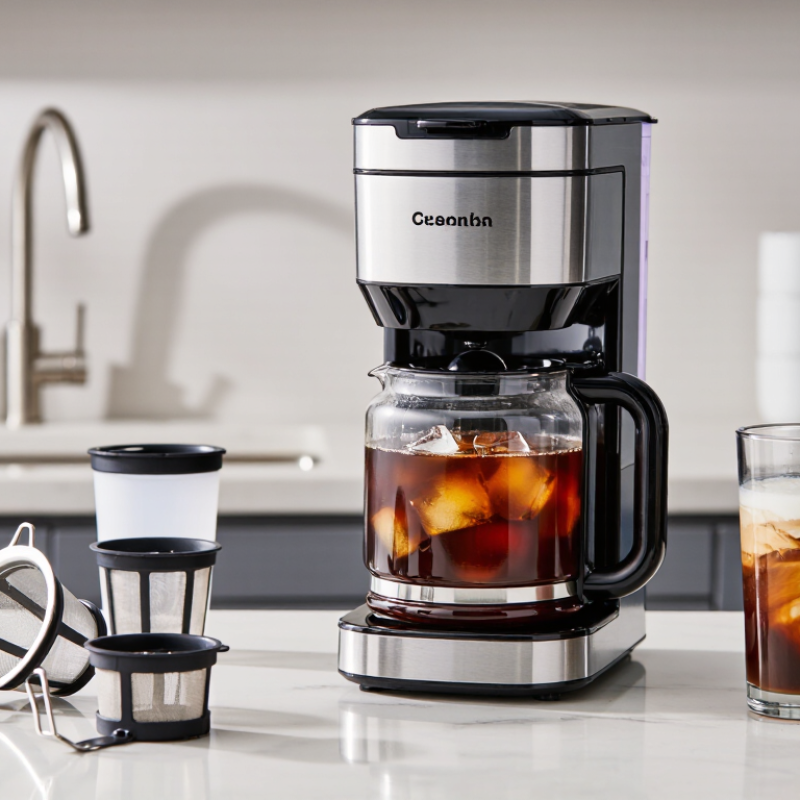
10 Tips for Choosing the Best Iced Coffee Maker

Understanding the Main Types of Iced Coffee Makers

Understanding the Main Types of Iced Coffee Makers

Choosing an iced coffee maker starts with understanding how each type extracts flavor. Cold brew makers steep coarse grounds in cool water for 8 to 24 hours. They produce a smooth, low-acid drink, but preparation requires patience and refrigerator space. I have found that a fine grind often creates cloudy coffee and a difficult filter cleanup. That assumption was wrong.

Flash-brew makers, sometimes called Japanese-style brewers, pour hot water over coffee and ice. This method preserves bright aromas and takes only a few minutes. However, melting ice can weaken the drink if the water ratio is poorly measured. Use a kitchen scale when possible. Small changes matter.

Immersion pitchers combine water and grounds in one container, making them practical for beginners. Some include fine mesh filters, while others require paper filters for a cleaner cup. Drip-style machines offer more control over flow speed and strength, but they usually cost more and need careful cleaning. Check whether parts detach easily. A complicated design may discourage regular use.

For any type, consider capacity, filter quality, brewing time, and storage space. Look for food-safe materials and clear instructions from reliable manufacturers. Avoid judging a machine by appearance alone. I once preferred a sleek pitcher, then noticed its narrow opening made scrubbing awkward. Convenience is part of performance.

Comparing Brewing Methods, Features, and Coffee Quality

10 Tips for Choosing the Best Iced Coffee Maker

Choosing an iced coffee maker starts with the brewing method. Cold brewing uses steeping time to create a smooth, low-acid cup. Flash brewing pours hot coffee over ice, preserving brighter aromas.

Tip 1: Choose cold brew for mellow flavor. Tip 2: Choose flash brewing for freshness. Tip 3: Check whether the filter removes fine grounds. Tip 4: Look for adjustable brew strength.

A weak cup cannot be repaired easily with melting ice.

Features should support consistent results, not decorate your kitchen. During testing, I valued a clear water reservoir, secure lid, and easy-to-clean filter.

Tip 5: Measure capacity against your daily servings. Tip 6: Prefer transparent markings for coffee-to-water ratios. Tip 7: Check how quickly the machine chills or drains. Tip 8: Inspect removable parts before buying.

Small crevices collect oily residue. That detail matters.

Coffee quality depends on water, beans, temperature, and dilution. Freshly ground coffee usually produces more defined flavor, but grind size must match the method.

Tip 9: Use a medium-coarse grind for steeped brewing. Tip 10: Taste the first batch before changing several settings.

My own measurements were not perfect, and I sometimes blamed the machine unfairly. A balanced iced coffee should smell inviting, taste clear, and remain pleasant after ten minutes. Ice quality matters too. Large, dense cubes melt slowly and protect the final flavor.

Evaluating Capacity, Size, Materials, and Ease of Use

10 Tips for Choosing the Best Iced Coffee Maker

Evaluating Capacity, Size, Materials, and Ease of Use

Cold coffee is no longer a niche habit. The National Coffee Association’s Spring 2024 report found that 67% of American adults drank coffee during the previous day. That demand makes capacity important. A 1-liter maker suits one or two daily drinkers, while a 1.5-liter model supports a family without constant refilling. Bigger is not always better. It occupies refrigerator space quickly.

Measure the shelf before buying. Leave room for the lid and a steady pouring angle. Narrow designs fit better beside milk cartons, but they can be harder to clean. Look for food-contact materials such as glass or certified food-grade plastic. Glass resists odor retention, yet it can break on a wet kitchen floor. Plastic is lighter and safer around children, though scratches may collect coffee residue over time. The U.S. Food and Drug Administration emphasizes that food-contact materials must be suitable for their intended use; certification details deserve attention.

The Specialty Coffee Association recommends controlled brewing variables, including water quality and extraction consistency.

Ease of use often decides whether the maker survives beyond one enthusiastic week. A wide filter opening, removable parts, and dishwasher-safe components reduce daily friction. A secure lid matters too. I once ignored it, and a refrigerator shelf became a small coffee lake. That mistake still influences my choices. Some makers claim effortless cleaning, but narrow filters can disprove that promise. Check replacement-filter availability, measurement marks, and whether the carafe pours without dripping.

Shortcuts help. But convenience should not erase durability.

Checking Filters, Cleaning Needs, and Long-Term Durability

Choosing an iced coffee maker requires more than comparing brew size and price. The National Coffee Association’s 2024 National Coffee Data Trends report found that 67% of American adults drank coffee the previous day. Frequent use makes filtration, cleaning, and durability practical concerns, not minor details. I have found that a cloudy filter basket can flatten flavor quickly. Small residue becomes noticeable in cold coffee.

Tip: Check the filter design before buying. A fine, reusable mesh filter can reduce paper waste, but it needs careful rinsing. Look for removable parts and clear replacement guidance. NSF consumer food-safety guidance emphasizes washing food-contact components regularly. Warm water alone may not remove coffee oils. Use mild detergent, then air-dry every piece completely. Some manuals recommend weekly deep cleaning, but heavy users may need it more often.

Tip: Inspect the long-term build. Consumer Reports’ appliance reliability research repeatedly shows that maintenance access affects ownership satisfaction. Choose sturdy hinges, a firm carafe lid, and controls that do not feel loose. A two-year warranty is useful, though it does not prove lasting quality. The U.S. Department of Energy also notes that energy use depends on operating habits and appliance design. An iced coffee maker with a short brewing cycle may use less electricity, but published efficiency data remains limited for this category. That gap deserves attention. Avoid assuming expensive means durable. Sometimes, simpler parts survive longer.

Matching the Coffee Maker to Your Budget and Daily Routine

10 Tips for Choosing the Best Iced Coffee Maker

Matching the Coffee Maker to Your Budget and Daily Routine

Start with your daily coffee habit, not attractive features. A compact brewer suits one person with limited counter space. Choose a larger model if several people drink coffee each morning. Check the total cost, including filters, storage jars, and replacement parts. A low purchase price can become expensive over time.

Look for adjustable strength controls if your taste changes. Choose a simple design when busy mornings matter most. Confirm that the brewing time fits your schedule. Some methods need twelve hours of steeping. Others produce iced coffee within minutes. Check whether the container fits your refrigerator door. A poor fit becomes irritating quickly. Prefer removable parts for easier cleaning. Clear measurement marks also reduce wasted coffee and water.

Consider how much ice the recipe requires. Too much ice can weaken the flavor. A concentrated brew usually handles dilution better. Read care instructions before buying. Hard-to-clean filters may discourage regular use. Noise can matter in a quiet kitchen. Energy use deserves attention, too. My ideal choice might not suit your routine. Convenience often matters more than advanced controls. Reconsider the purchase if you only make iced coffee occasionally. A basic brewer may serve you better.

10 Tips for Choosing the Best Iced Coffee Maker Matching the Coffee Maker to Your Budget and Daily Routine
Tip Key Buying Factor Useful Specification or Range Best Match Why It Matters Practical Check
1 Set a realistic budget $20–$50 for a basic manual brewer; $50–$150 for a larger or more adjustable setup Budget-conscious users A manual brewer can make smooth iced coffee without the cost of an electric appliance. Include the cost of filters, a storage container, coffee, and ice in the total budget.
2 Choose the right batch size One serving: 250–500 ml; multi-serving: 750 ml–1.5 L Solo drinkers or households The correct capacity reduces waste and avoids making several small batches each day. Measure your usual daily serving before selecting the carafe or brewing chamber.
3 Match the brewing method to your schedule Cold brew steeping: about 8–24 hours; flash brewing: approximately 5–10 minutes Planners or last-minute drinkers Cold brew requires advance preparation, while flash brewing is more suitable when coffee is needed immediately. Select a method that fits when you normally prepare coffee, not only how it tastes.
4 Look for adjustable strength A useful starting ratio is 1:8 to 1:10 for cold brew concentrate, diluted to taste Drinkers who vary milk, water, or ice Strength controls help compensate for dilution from ice and accommodate different flavor preferences. Prefer models that allow control of coffee dose, water volume, or steeping time.
5 Check filter quality Fine reusable mesh for convenience; paper filtration for a cleaner cup Low-maintenance users or clarity-focused drinkers The filter affects sediment, body, cleanup time, and ongoing operating cost. Confirm whether the filter is washable, replaceable, and easy to remove without spilling grounds.
6 Evaluate refrigerator fit Many compact brewers are approximately 15–25 cm wide and 20–30 cm tall Small kitchens or shared refrigerators Cold brew often steeps or stores in the refrigerator, so height and handle clearance are important. Measure the shelf height and depth, including space needed to remove the lid.
7 Prioritize ease of cleaning Removable parts and wide openings generally make daily rinsing easier Daily coffee drinkers Coffee oils and residue can build up quickly when equipment is not cleaned after use. Choose smooth interiors, accessible filters, and dishwasher-safe parts where appropriate.
8 Consider material and durability Borosilicate glass tolerates temperature changes; stainless steel resists impact; plastic is lightweight Home use, travel, or high-traffic kitchens Material affects weight, break resistance, odor retention, and long-term handling. Look for a secure lid, stable base, and materials suitable for repeated contact with beverages.
9 Check serving speed and convenience Manual systems need preparation time; electric systems may offer programmable or one-touch operation Busy mornings or multiple daily servings Convenience can be more valuable than a lower purchase price when the brewer is used every day. Compare setup, brewing, dispensing, and cleanup time rather than focusing only on brew time.
10 Account for energy and ongoing costs Manual brewers use no electricity; electric models add energy use and may require descaling Long-term value seekers A low purchase price may be offset by disposable filters, replacement parts, or maintenance supplies. Estimate annual filter, cleaning, and replacement costs before making a final decision.
Selection rule: For occasional use, choose a compact manual brewer. For daily preparation, prioritize capacity, cleaning convenience, refrigerator fit, and repeatable strength control over extra features.

FAQS

What is the difference between cold brew and flash brew?

Cold brew steeps coarse grounds in cool water for eight to twenty-four hours. It creates a smooth, low-acid drink. Flash brew pours hot coffee over ice and takes only a few minutes. It preserves brighter aromas.

Which iced coffee maker suits a mellow flavor?

Choose a cold brew maker for a softer, less acidic taste. Use coarse grounds to reduce cloudy coffee and difficult filter cleaning. Patience is required.

How can I prevent flash-brewed coffee from tasting weak?

Measure the coffee, water, and ice carefully. Melting ice dilutes the drink quickly. A kitchen scale can improve consistency. Small changes matter.

Is an immersion pitcher suitable for beginners?

Yes, it combines water and grounds in one container. Some models use fine mesh filters, while others need paper filters. The coffee may be less clear without finer filtration.

What features make an iced coffee maker easy to use?

Look for a secure lid, clear measurement marks, and removable parts. A wide opening makes scrubbing easier. Narrow crevices can collect oily residue. That detail matters.

How much capacity should my iced coffee maker have?

Match capacity with your usual servings and refrigerator space. A compact brewer suits one person. A larger container helps households with several morning drinkers. Check the door fit.

Does grind size affect iced coffee quality?

Yes, grind size should match the brewing method. Medium-coarse grounds usually suit steeped brewing. Fine grounds may create cloudy coffee and messy cleanup. I once blamed the machine unfairly.

What should I consider besides the purchase price?

Include filters, storage jars, replacement parts, and energy use. A cheaper brewer can cost more over time. Simple designs may be better for occasional use. Fancy controls are not always useful.

How important is cleaning when choosing a brewer?

Very important. Removable filters and accessible openings make regular cleaning easier. A complicated design may discourage frequent use. I preferred a sleek pitcher once, then regretted its narrow opening.

How can I improve the final flavor of iced coffee?

Use fresh grounds, suitable water, and large, dense ice cubes. Dense cubes melt slowly and protect the flavor. Taste the first batch before changing several settings. My measurements are still imperfect.

Conclusion

Choosing the right Iced Coffee Maker starts with understanding the main types, from simple steeping systems to machines designed for faster brewing and greater control. Compare each method by considering flavor strength, brewing time, temperature control, and the overall quality of coffee it produces. Capacity is also important: a compact model may suit one person, while a larger design is more practical for families or frequent entertaining. Pay attention to materials, countertop size, serving convenience, and how easily the device fits into your daily routine.

Before buying, examine the filter system, cleaning process, and expected durability. Reusable filters can reduce waste, but they may require more careful maintenance, while removable parts make rinsing and storage easier. Look for a sturdy construction and practical design that can handle regular use. Finally, set a realistic budget and choose features that genuinely support your habits. The best option is not necessarily the most advanced one, but the Iced Coffee Maker that delivers consistent results, simple upkeep, and good value over time.

Amelia

Amelia

Amelia is a seasoned marketing professional with a wealth of expertise in our company’s core offerings. With an unwavering passion for driving growth and innovation, she plays a pivotal role in shaping our marketing strategies and enhancing brand visibility. A key aspect of her responsibilities......