Imler
In the competitive landscape of the coffee industry, investing in high-quality Coffee Roasting Equipment is crucial. According to the Specialty Coffee Association, the global coffee market is projected to reach $102.02 billion by 2024, with a growing consumer preference for freshly roasted beans. This trend underscores the importance of precision and consistency in roasting to meet customer expectations.
Coffee roasting is both an art and a science. The right equipment allows for optimal control over temperature and time, impacting flavor and aroma. A report from IBISWorld highlights that the coffee roasting market has seen a steady annual growth rate of 3.8%. As new coffee shops open, each one must differentiate itself through unique offerings.
However, acquiring Coffee Roasting Equipment can be daunting. Many businesses face challenges in selecting the right machinery that balances quality and cost. Equipment maintenance is another concern that can lead to setbacks. Companies should weigh their options carefully to ensure they make informed investments. Ultimately, successful roasting hinges on thoughtful equipment choices and skilled operation.
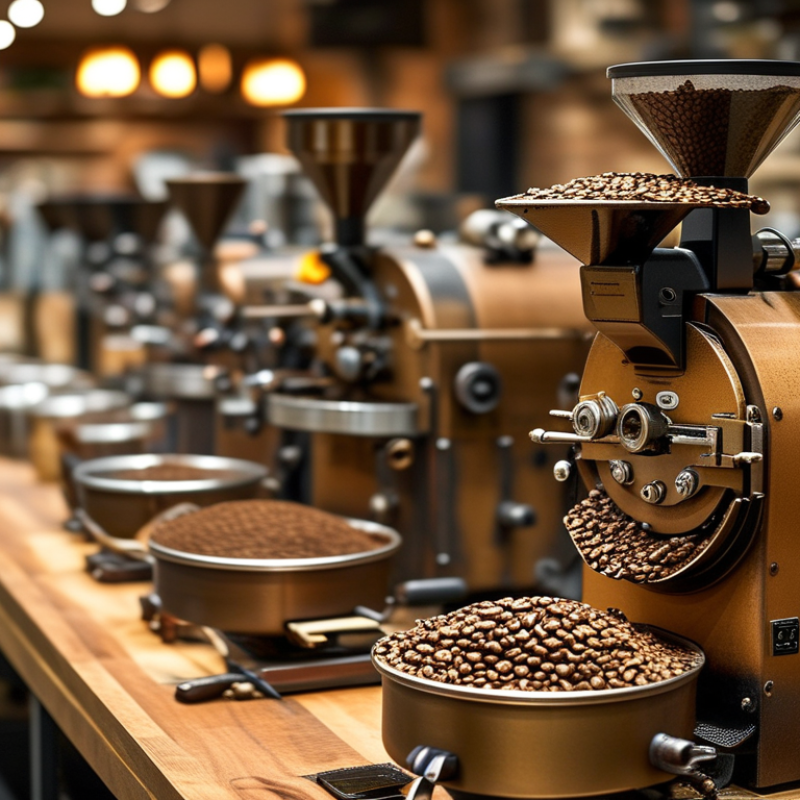
Investing in quality coffee roasting equipment is crucial for specialty coffee businesses. This equipment directly impacts the flavor, aroma, and overall quality of the coffee. A well-designed roaster allows for precise temperature control and monitoring, creating unique profiles for different beans. Without this control, inconsistencies can arise, leading to dissatisfied customers.
Crafting specialty coffee requires understanding the roasting process intimately. Each coffee bean has its own characteristics that can be enhanced or diminished based on how it's roasted. Therefore, investing in reliable roasting equipment is not just an expense; it’s a necessity for maintaining high standards. Businesses that overlook this may find themselves missing out on the growing market of coffee enthusiasts who seek rich and diverse flavors.
The journey of roasting coffee isn’t an easy one. Many roasters face the challenge of finding the right balance. Equipment can sometimes underperform, leading to burnt or unevenly roasted beans. Learning from these mistakes is part of the craft. It emphasizes the need for quality equipment and the skilled roaster behind it. Continuous experimentation and adaptation are vital components of perfecting specialty coffee.
Effective coffee roasting machines are crucial for any coffee business looking to thrive. Equipment quality directly affects flavor and consistency. According to industry reports, nearly 70% of coffee consumers prioritize flavor over brand. This highlights the need for precise roasting equipment. A machine that offers consistent heat distribution can enhance the roasting process. Even minor temperature fluctuations can change the coffee’s taste profile significantly.
Additionally, size and capacity of roasting machines play a vital role. Machines with larger capacities can meet growing demand while maintaining quality. A study found that 55% of coffee shops plan to expand their offerings in the next year. Hence, investing in scalable roasting equipment is essential. Considerations include ease of use and maintenance, as they impact operational efficiency.
Reliability is another key characteristic. A machine with a strong warranty or service support can reduce downtime. According to a market analysis, businesses face an average of 20% downtime due to equipment failure. This can lead to lost revenue and trust. Understanding these factors helps ensure that the chosen roasting equipment aligns with business goals and customer expectations.
Investing in quality coffee roasting equipment is crucial for profitability. A recent industry report found that businesses using advanced roasting technology can boost their profit margins by 15%. This increase often stems from improved flavor profiles and consistency, attracting more customers. When coffee beans are roasted with precision, they unlock unique flavors that discerning consumers seek.
The initial cost of high-quality roasting equipment might seem daunting. However, research indicates that businesses can recoup this investment within two years, thanks to higher sales volume. Customers are willing to pay a premium for expertly roasted coffee. This willingness reflects a growing trend; according to surveys, 60% of coffee drinkers prioritize quality over price.
Moreover, operational efficiency plays a vital role. Modern roasters minimize energy consumption and reduce waste. One study showed that businesses could decrease energy costs by up to 25% with newer models. Over time, these savings contribute to a healthier bottom line. Yet, if a business opts for cheaper, outdated machinery, they may face higher maintenance costs and inconsistent results. Exploring this balance is essential for long-term success.
This graph illustrates the estimated profit margins for different quality levels of coffee roasting equipment. As the quality of the roasting equipment increases, the estimated profit margin also rises significantly, highlighting the financial impact of investing in quality roasting equipment for your business.
The coffee roasting industry has witnessed significant growth in recent years. According to a report by IBISWorld, the market size of coffee roasting in the United States reached approximately $12 billion in 2022. This growth trend reflects a shift in consumer preferences toward specialty coffee, leading to increased demand for high-quality coffee beans and advanced roasting equipment. Coffee connoisseurs are willing to pay a premium for distinct flavors and unique aromas, which underscores the importance of investing in reliable roasting technology.
Moreover, the Specialty Coffee Association reported a 20% increase in the number of micro-roasters from 2016 to 2021. This surge reveals a brewing culture that favors local, artisanal products over mass-produced options. Small roasteries are currently focusing on single-origin beans that often highlight regional characteristics. However, with this focus on quality comes the challenge of maintaining consistency. Roasting equipment must ensure precise temperature control and uniformity to produce desired results.
As the market evolves, it's crucial to adapt to these trends. While many new players are eager to enter the coffee roasting scene, not everyone can sustain the quality their target market demands. Investing in state-of-the-art coffee roasting equipment can be a game-changer. However, not all equipment is created equal. Selecting the right machinery requires careful consideration and expert knowledge, as decisions can significantly impact overall flavor and quality.
| Year | Market Size (USD Billion) | Growth Rate (%) | Number of Roasters | Equipment Type |
|---|---|---|---|---|
| 2018 | 4.2 | 6.5 | 1,200 | Commercial Roasters |
| 2019 | 4.5 | 7.1 | 1,350 | Home Roasters |
| 2020 | 4.9 | 9.0 | 1,500 | Specialty Roasters |
| 2021 | 5.3 | 8.2 | 1,700 | Industrial Roasters |
| 2022 | 6.0 | 9.8 | 1,900 | Mini Roasters |
Coffee roasting is a precise art that heavily relies on technology. Consistency in roasting leads to a predictable flavor profile, essential for customer satisfaction. According to the Specialty Coffee Association, 73% of coffee consumers prioritize flavor consistency. This data points to the strong relationship between technology and customer expectations.
Roasting equipment equipped with advanced sensors can monitor temperature and airflow in real time. This ensures that each batch of coffee beans is roasted uniformly. For instance, a slight variation in temperature can lead to drastically different flavors. A report by the National Coffee Association states that 50% of coffee professionals believe inconsistent roasting is a major challenge.
However, not all businesses leverage this technology effectively. Some roasters still rely on traditional methods, risking flavor inconsistency. Embracing technology can mitigate these risks and improve overall quality. This approach requires continuous evaluation and adaptation to market demands. Investing in reliable roasting equipment is not just about enhancing quality; it is a strategic necessity in a competitive landscape.
: It affects the flavor, aroma, and overall quality of the coffee.
Each bean has unique traits that can be affected by roasting methods.
It can lead to burnt or unevenly roasted beans, impacting customer satisfaction.
Flavor consistency, size, capacity, ease of use, and maintenance are essential factors.
Downtime from equipment failure can lead to lost revenue and trust.
There is a growing preference for specialty coffee and local, artisanal products.
Almost 70% of consumers prioritize flavor according to industry reports.
It helps roasters adapt and improve, ensuring high-quality coffee production.
It allows businesses to meet growing demand while maintaining quality levels.
They may underestimate the importance of precise temperature control during roasting.
Coffee Roasting Equipment plays a crucial role in the success of specialty coffee businesses, as it directly influences the quality and flavor profile of the final product. Effective coffee roasting machines are characterized by precise temperature control, even heat distribution, and the ability to maintain consistency throughout the roasting process. The financial impact of investing in high-quality roasting equipment can be significant, enhancing profitability through improved customer satisfaction and repeat business.
As the coffee roasting industry continues to grow, understanding market trends becomes essential for business owners. The integration of technology in coffee roasting not only supports quality consistency but also allows for innovative roasting techniques that can set a brand apart. Ultimately, the right Coffee Roasting Equipment is not just an asset but a necessity for those looking to thrive in this competitive market.
