Imler Imler

What Is a Coffee Scale and How Does It Work?

Time:2026-10-10 Author:Charlotte
0%

A Coffee Scale is a small instrument that measures coffee and water by weight. It helps brewers control the relationship between both ingredients, rather than relying on spoons, volume marks, or guesswork. That difference can make a morning brew taste noticeably sweeter, cleaner, or stronger.

Coffee educator and World Barista Champion James Hoffmann has said, “Consistency is the foundation of good coffee.” A Coffee Scale supports that consistency by using a load cell to detect weight changes. Many models also include a built-in timer, allowing you to track pouring speed and total brewing time. A brewer can place the dripper and server on the platform, press tare, and add water with greater control. Simple steps.

For example, a 1:16 coffee-to-water ratio means 20 grams of coffee needs about 320 grams of water. The scale displays those numbers while you brew. Its timer records how long extraction takes, which helps you repeat a successful recipe. Some scales respond quickly, while cheaper models may lag during a pour. That weakness matters.

Accuracy is useful, but it is not magic. Coffee freshness, grinder quality, water temperature, and pouring technique still influence the cup. I have found that beginners sometimes watch the display too closely and forget the aroma, flow, and color of the coffee. A scale should guide judgment, not replace it. This article will explain what a Coffee Scale is, how its sensors work, and how to use one without making brewing feel unnecessarily complicated.
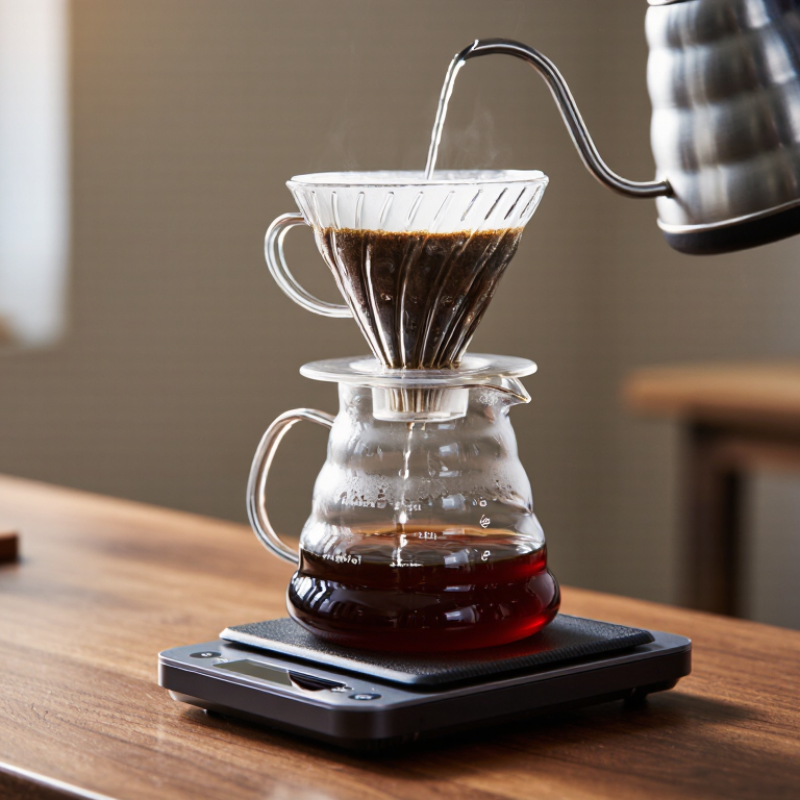
What Is a Coffee Scale and How Does It Work?

What Is a Coffee Scale?

A coffee scale is a small measuring device designed to weigh coffee and water during brewing. It usually displays weight in grams. Many models also include a built-in timer, although timing is not essential for measuring.

In daily use, I place the brewing vessel on the scale and press the tare button. The display returns to zero. I then add coffee grounds, watching the numbers change slowly. After adding water, the scale shows the actual amount poured. This helps keep the coffee-to-water ratio consistent. A scale can also reveal uneven habits, such as pouring too quickly or using more water than expected. Those details are easy to miss with a spoon or measuring cup.

Good scales respond quickly and measure in small increments. A stable, level surface improves accuracy. Steam, splashes, and a hot brewing vessel may affect the reading. I have sometimes trusted a number too quickly, only to notice that the container was still moving. That mistake matters. The scale measures weight, not flavor, freshness, or extraction quality. It cannot fix old coffee or poor technique. Still, it gives useful evidence for adjusting a recipe. Over time, recording the coffee weight, water weight, and brewing time can make changes easier to understand. A basic scale may be enough, but water-resistant construction and a readable display are practical advantages.

How Does a Coffee Scale Measure Weight?

A coffee scale measures weight through a small sensor beneath its platform. This sensor is usually a load cell, a metal element that bends slightly under pressure. The movement is too small to see. Strain gauges detect it by changing their electrical resistance. An internal circuit converts that change into a digital signal, then displays the result in grams.

The process happens almost instantly. I place the scale on a firm, level surface and press the tare button with an empty brewing vessel. Tare removes the vessel’s weight from the reading. When coffee or water enters, the load cell feels the added force. The scale’s processor compares that signal with calibration data and updates the number on the screen. A stable reading matters more than a fast one.

Small errors still occur. Steam, uneven surfaces, vibrations, and a warm scale can affect accuracy. I once blamed my pouring technique, but the real problem was a damp towel touching the platform. That mistake changed my routine. I now check the display after setting the vessel down and avoid pressing the platform during brewing. Most scales measure in 0.1-gram steps, but that does not guarantee perfect accuracy. Their performance depends on calibration, battery condition, and the weight range being measured. A careful user should question unusual readings instead of adjusting the recipe immediately.

Key Features and Components of Coffee Scales

What Is a Coffee Scale and How Does It Work?

Key Features and Components of Coffee Scales

A coffee scale measures weight while coffee is brewed. Its main sensor is a load cell. When water or coffee presses on the platform, the load cell changes slightly. The scale converts that change into a digital reading. This process helps brewers control coffee dose, water volume, and brewing time with greater consistency.

Useful scales usually include a tare button, a built-in timer, and a clear display. Tare removes the weight of the dripper or server before brewing. The timer tracks contact time, which can affect extraction. A readable display matters when steam or splashes cover the counter. Some models offer 0.1-gram resolution, rechargeable batteries, and water-resistant surfaces. However, water resistance does not mean unlimited protection. I still avoid placing a wet scale under a running tap.

Tips: Place the scale on a flat, stable surface. Test it with a known weight if readings seem unusual. Keep the platform clean, and check battery levels before brewing. Fast response is helpful, but it can also make readings jump during pouring. A gentle pour usually gives more useful feedback. No scale fixes every brewing problem. Grind size, water temperature, and technique still require careful adjustment.

How to Use a Coffee Scale for Brewing

A coffee scale measures the mass of coffee and water during brewing. Most models also include a timer. Together, these functions make each pour easier to observe and repeat. Volume markings can mislead because water levels change with foam and grounds. Grams provide a steadier reference.

Place the brewer and serving vessel on the scale. Press tare to return the display to zero. Add the ground coffee, then record its weight. A common starting point is 1 gram of coffee for 15 to 17 grams of water. This ratio is not a rule. Different coffees may taste better with different amounts.

Start the timer when water touches the grounds. Pour slowly and watch the display rise. For example, 20 grams of coffee may need about 320 grams of water. Pause briefly between pours if the bed looks flooded. Keep the stream gentle, like a thin thread. Small adjustments matter.

Taste the finished cup before changing everything. If it tastes weak, use slightly less water or a finer grind. If it tastes harsh, try more water or a coarser grind. My first pours often ran too quickly because I watched the timer and ignored the stream. A scale cannot correct poor pouring technique. It only makes the problem visible. Wipe spills promptly, since moisture can affect readings and damage sensitive parts. Consistency improves slowly, and imperfect brews still provide useful information.

Why Accurate Weighing Improves Coffee Quality

What Is a Coffee Scale and How Does It Work?

A coffee scale measures coffee and water by weight, usually in grams. Its sensor detects tiny changes, while a timer tracks brewing duration. This makes the recipe repeatable. A spoon can look accurate, but bean size and density vary. One scoop may quietly differ by several grams.

Accurate weighing improves coffee quality because it controls the coffee-to-water ratio. The Specialty Coffee Association’s Brewing Control Chart uses 18–22% extraction yield and 1.15–1.35% beverage strength as useful reference ranges. These figures are not a guarantee of great flavor. They provide a measurable starting point. For example, 20 grams of coffee with 320 grams of water creates a 1:16 ratio. A small 10-gram water error changes that balance noticeably.

Taste still matters more than perfect numbers. A scale cannot repair stale coffee, uneven grinding, or poor water. During repeated brewing tests, a scale can reveal why one cup tastes thin while another tastes harsh. The International Coffee Organization’s market reports also show how coffee supply and quality conditions vary across producing regions, so fixed recipes need flexibility. That part is easy to forget. Weighing improves control, but careful tasting must challenge the numbers.

What Is a Coffee Scale and How Does It Work? — Why Accurate Weighing Improves Coffee Quality
Data Dimension Typical Information How It Works or Why It Matters Practical Brewing Benefit
Definition A coffee scale is a compact digital scale designed to measure coffee beans, ground coffee, and brewing water. It uses a load cell to detect force and converts that force into a weight reading shown on a digital display. It replaces visual estimation with repeatable measurements.
Measurement units Most coffee scales display grams; some also offer ounces. Grams are commonly used because coffee recipes often specify both coffee dose and water weight in the same unit. Using one unit makes recipes easier to repeat and compare.
Resolution Many brewing scales show increments of 0.1 g or 1 g, depending on the model and measurement range. Resolution indicates the smallest displayed change; it does not always equal the scale’s total accuracy. Fine resolution is useful for weighing small doses and adjusting recipes gradually.
Tare function A tare button resets the display to zero after a container or brewing vessel is placed on the platform. The scale subtracts the container’s weight from the total measurement. Users can weigh coffee and water directly in a dripper, server, or cup without calculating container weight.
Maximum capacity Capacity varies by design; common brewing scales support several kilograms, while small precision scales may support less. The total load includes the vessel, coffee, and water, so the vessel’s weight must be considered. A suitable capacity prevents overloads and keeps measurements within the scale’s intended operating range.
Response time A brewing scale should update quickly enough to follow a pour in real time. The load cell repeatedly samples changes in force and refreshes the displayed value. Fast readings help control pouring speed and stop the brew at the target water weight.
Coffee-to-water ratio A common starting point is approximately 1:15 to 1:18, such as 20 g of coffee to 300–360 g of water. The ratio compares the mass of dry coffee with the mass of brewing water. Changing the ratio provides a systematic way to make a cup stronger or lighter.
Water measurement Water is measured by mass, where 1 g of water is approximately equal to 1 mL under ordinary brewing conditions. The scale measures the water added to the brewing vessel, including separate pours. Accurate water dosing improves consistency between brewing sessions.
Extraction control Scale readings do not directly measure extraction, but they help control the coffee and water inputs that influence it. Consistent dose, water quantity, and pour timing reduce avoidable variation in the brewing process. Brewers can adjust grind size, ratio, or technique based on taste with greater confidence.
Timing function Many coffee scales include a built-in timer, although a separate timer can also be used. The timer records contact time between water and coffee or helps coordinate brewing stages. Weight and time together make pour-over recipes easier to reproduce.
Espresso dosing A scale can measure the dose of ground coffee and the beverage output, often in grams. The beverage mass is compared with the dry coffee dose to calculate the brew ratio. Monitoring output helps identify changes in espresso flow and repeat a preferred recipe.
Calibration Calibration uses a known reference mass specified for the scale. The process allows the scale to correct or verify its measurement system. Regular checks help identify drift, uneven surfaces, low battery effects, or overload-related errors.
Placement requirements The scale should sit on a stable, level, dry surface away from vibration and moving air. Movement, steam, splashes, or an unstable platform can affect the load-cell reading. Stable placement improves measurement reliability during brewing.
Main sources of variation Common causes include inconsistent coffee dose, water volume, pouring speed, grind size, temperature, and brew time. A scale controls mass-related variables but cannot eliminate every brewing variable. Accurate weighing makes other adjustments easier to evaluate and repeat.
Quality impact Precise weighing improves process consistency rather than guaranteeing a specific flavor. Consistent inputs reduce random variation, allowing taste differences to be linked more clearly to intentional recipe changes. Brewers can make informed improvements instead of relying only on appearance or guesswork.

Note: Recommended ratios, capacities, and display resolutions are general brewing guidelines. Actual performance depends on the scale’s specifications, calibration, surface conditions, and brewing method.

FAQS

What does a coffee scale measure during brewing?

It measures coffee and water weight in grams. This creates a steadier reference than volume markings.

How does a coffee scale work?

A load cell detects pressure on the platform. The scale converts that change into a digital weight reading.

Why is the tare function useful?

Tare removes the brewer or server’s weight. Place everything on the platform, then press tare before adding coffee.

Why does a built-in timer matter?

It tracks how long water touches the grounds. Contact time can change extraction and flavor.

How should I prepare a scale for brewing?

Place it on a flat, stable surface. Check the battery and clean the platform before brewing.

What coffee-to-water ratio can I try?

Start with 1 gram of coffee for 15 to 17 grams of water. It is only a starting point.

How should I pour water using a scale?

Start the timer when water reaches the grounds. Pour gently, like a thin thread, and watch the weight rise.

What should I do if the coffee tastes weak or harsh?

Weak coffee may need less water or a finer grind. Harsh coffee may improve with more water or a coarser grind.

Can a coffee scale fix every brewing problem?

No. Grind size, water temperature, and pouring technique still matter. The scale only makes problems easier to see.

How can I protect the scale from water damage?

Wipe spills promptly and avoid running water over the scale. Water-resistant does not mean waterproof.

Conclusion

A Coffee Scale is a compact digital tool designed to measure the weight of coffee beans, ground coffee, and brewing water with precision. Unlike relying on scoops or visual estimates, it provides numerical measurements that help brewers maintain a consistent coffee-to-water ratio. Most coffee scales use a sensitive weighing surface, a clear display, a tare function to reset the reading, and a timer to track brewing time. Some models may also include flow-rate or unit settings, but the essential purpose is accurate measurement.

To use a Coffee Scale, place the brewing equipment on its surface, press the tare button, and weigh the coffee before adding water. Tare the scale again, then measure the water while monitoring the timer during brewing. Accurate weighing improves coffee quality by making each recipe easier to repeat and adjust. It can reveal whether a brew uses too much or too little coffee or water, helping achieve a more balanced flavor, consistent strength, and greater control over the brewing process.

Charlotte

Charlotte

Charlotte is a seasoned marketing professional with a deep understanding of the company's portfolio and a passion for elevating its presence in the market. With a keen eye for detail and a commitment to excellence, she ensures that our professional blog is regularly updated with insightful articles......