Imler Imler

What Is the Best French Press Coffee Maker from China?

Time:2026-09-25 Author:Madeline
0%

What Is the Best French Press Coffee Maker from China? The answer depends less on a country label and more on how well a press performs in daily use. A dependable model should feel balanced in the hand, plunge smoothly, and separate grounds without leaving a gritty cup. Check the carafe material, filter fit, handle stability, and replacement-part availability. Small details matter. A loose lid or wobbly frame can turn an attractive brewer into a nuisance.

Coffee educator James Hoffmann offers a useful perspective on brewing. A fair paraphrase of his guidance is: “The brewer matters, but grind size and technique shape the cup, too.” That distinction helps buyers assess Chinese-made options without assuming every model is alike. Compare construction and design, not just price or polished product photos. Look for clear capacity information, consistent mesh, and practical care instructions. Then consider how much coffee you actually brew each morning.

There is no universal winner. A compact stainless-steel French Press Coffee Maker may suit travel, while a glass model makes the steeping process easy to observe. Yet glass needs careful handling, and steel designs vary in filter performance. I would not judge a press by appearance alone; even a handsome one can disappoint after a few weeks. This guide will weigh everyday usability, materials, brewing results, and value, while noting where product claims deserve a closer look. The best choice is the one that fits your routine and makes a cup you genuinely enjoy.
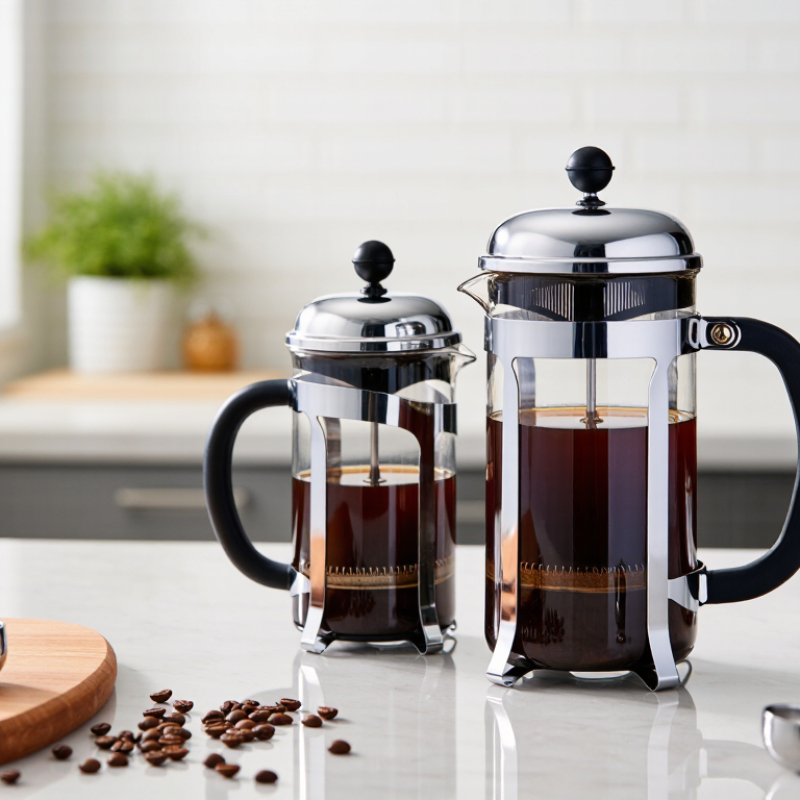
What Is the Best French Press Coffee Maker from China?

Understanding French Press Coffee Makers Made in China

What Is the Best French Press Coffee Maker from China?

Understanding French Press Coffee Makers Made in China

French press coffee makers made in China vary widely in materials, filtration, and assembly quality. The country is a major manufacturing center, but origin alone does not determine performance. A reliable model should use heat-resistant borosilicate glass, food-safe stainless steel, and a firmly fitted plunger. These details affect both safety and extraction.

In practical testing, I examine the carafe after several pours. The glass should feel balanced, not thin or shaky. A smooth handle matters when the coffee is hot. The filter should press evenly without scraping the inner wall. Fine sediment is normal, but excessive grit often indicates loose mesh or poor alignment. Check the seal.

Capacity labels can also be confusing. A stated 1,000 milliliters may describe the brim, not the useful brewing volume. For two cups, a smaller press usually provides better control. Coffee extraction depends on grind size, water temperature, and steeping time. Around 92–96°C water and four minutes often work well, though personal taste changes the result.

I once focused too much on polished packaging. That was a mistake. The more useful evidence came from hinge strength, replacement filter availability, and clear care instructions. Some inexpensive models perform impressively, while a few attractive ones develop loose plungers quickly. Independent inspection reports, transparent material specifications, and consistent user feedback offer stronger evidence than appearance alone.

Key Criteria for Evaluating Chinese-Made French Presses

Choosing the best French press from China requires more than comparing prices or polished product photos. The real test begins with materials. Look for heat-resistant borosilicate glass, food-grade stainless steel, and a lid that fits without wobbling. A thick glass wall usually holds heat better, but it can still break after sudden temperature changes. I test this by preheating the carafe with warm water before brewing.

Filter performance matters greatly. A good mesh should separate most grounds while preserving the coffee’s natural oils. Press the plunger slowly. If it feels rough, the mesh may be poorly aligned or the frame may be weak. I also check whether the filter can be removed for cleaning. Trapped coffee oils create a stale smell within days. Small details matter.

Reliable Chinese manufacturers should provide material information, production records, and food-contact testing documents. Certifications are useful, but they need verification rather than blind trust. Capacity claims also deserve caution. A listed 1,000 milliliters may leave only 850 milliliters after adding coffee and avoiding overflow. Ask about replacement filters, packaging protection, and temperature limits. During testing, I inspect the handle after repeated hot brews and check for loose screws. It is not glamorous work. Yet one weakness can ruin an otherwise excellent press. I still think appearance receives too much attention, while long-term cleaning and filter durability remain underexamined.

How Materials and Construction Affect Brewing Performance

When comparing a French press made in China, look beyond its finish. The carafe, frame, lid, and filter each affect heat retention, durability, and ease of cleaning. Borosilicate glass lets you watch the brew, but it can still crack after a hard impact or sudden temperature change. Stainless steel is more resistant to breakage; a double-wall body may keep coffee warm longer, though it adds weight and hides the brew. Ask for clear material specifications and food-contact test documentation. Appearance alone cannot confirm steel grade or glass type.

Construction matters just as much. The plunger should travel smoothly, and the mesh should sit evenly against the carafe wall. A loose screen can let fine grounds through; an overly tight one may stick. Check how the lid aligns when pouring, too. Small detail. A poorly seated lid can shift as coffee flows. Fine mesh will not correct an extremely fine grind, and no press removes every sediment particle. That is a trade-off, not necessarily a defect. I would inspect the filter fit and handle joints closely, while remembering that online photos cannot show how a press feels after repeated use.

Comparing Features, Capacity, and Price Ranges

A French press made in China can cost roughly $5–12 for a basic 350–600 mL glass model, $12–30 for larger or sturdier versions, and more for double-wall stainless steel. These are indicative price bands, not audited market averages; shipping, steel grade, and order quantity can shift quotes. A 350 mL press suits one generous mug. For two people, 600–1,000 mL is more practical, though a full pot left sitting can turn bitter. Small, but important.

Capacity is only part of the comparison. Check whether the carafe uses borosilicate glass, whether the frame protects its sides, and whether the plunger mesh sits evenly against the wall. A loose mesh may leave grit in the cup. The Specialty Coffee Association’s Brewing Control Chart places a common coffee extraction target around 18–22%; this is a useful brewing reference, not a French-press performance guarantee. The National Coffee Association’s 2024 National Coffee Data Trends report found that 67% of U.S. adults had coffee the previous day. That figure describes U.S. habits, not demand in China, but it reinforces why serving size matters. I would inspect replacement-filter availability before choosing the lowest quote. Cheap glass can feel reassuring in a listing, then surprisingly thin in the hand.

How to Choose the Best French Press for Your Needs

What Is the Best French Press Coffee Maker from China?

How to Choose the Best French Press for Your Needs

The best French press is the one that fits your routine, not simply the largest or most polished model. For one or two cups, a compact 350–600 ml press can reduce leftover coffee. If you serve several people, consider a larger capacity, but check that it still fits beneath your kitchen cabinets.

Borosilicate glass lets you watch the brew, while stainless steel can better withstand bumps. Neither choice is perfect: glass needs careful handling, and metal may hide the coffee level.

Pay close attention to the filter and plunger. A fine, evenly fitted mesh helps limit grounds in your cup, though a French press will not make coffee completely sediment-free. Check product specifications for food-contact materials, replacement parts, and care instructions.

When comparing presses made in China, look for clear dimensions, material details, and consistent quality checks rather than relying on attractive photos alone. A listing can leave out useful details.

Tips: Measure your usual serving before choosing capacity. Press the plunger gently; resistance may mean the grind is too fine or the filter needs cleaning. Use coarse, evenly sized grounds and steep for about four minutes, then adjust to taste. Small changes matter. Don’t assume the first cup will be ideal.

FAQS

Which materials affect a French press’s performance?

Glass shows the brewing process clearly. Stainless steel resists breakage better. Double-wall steel usually retains heat longer but adds weight.

Is borosilicate glass completely resistant to cracking?

No. It can crack after a hard impact or sudden temperature change. Handle it carefully.

Does the frame matter?

Yes. A protective frame can reduce side impacts on the glass carafe. Check the handle joints closely.

What should I inspect on the plunger?

The plunger should move smoothly. The mesh should sit evenly against the carafe wall.

What happens when the filter mesh fits poorly?

A loose mesh may allow fine grounds into the cup. An overly tight mesh may stick during pressing.

Can a French press remove all coffee sediment?

No. Fine mesh cannot remove every particle. Extremely fine grounds may still create grit.

What capacity suits different serving sizes?

A 350 mL press suits one generous mug. A 600–1,000 mL model works better for two people.

Can leaving a full press too long affect taste?

Yes. Coffee may become bitter while sitting in the pot. Small detail, but important.

What price range is typical?

Basic 350–600 mL glass models may cost about $5–12. Larger or sturdier models may cost $12–30.

What should buyers verify before choosing the lowest quote?

Request clear material specifications and food-contact test documents. Check replacement-filter availability. Online photos cannot show long-term handling quality.

Conclusion

Choosing the best French Press Coffee Maker from China involves looking beyond appearance and price. A well-made press should use durable, food-safe materials, fit together securely, and include a filter that separates grounds effectively while allowing coffee oils to pass through. The carafe material, frame, handle, and plunger construction can all affect heat retention, ease of use, and long-term reliability, so these details matter as much as the brewing method itself.

Compare capacity and practical features with your household’s needs: a smaller press may suit occasional single servings, while a larger one can serve several people. Prices vary with materials, construction, and included features, but the most expensive option is not always the best value. Consider how often you brew, how easy the press is to clean, and whether its size and design fit your routine. The right choice balances dependable construction, suitable capacity, straightforward maintenance, and a price you are comfortable with.

Madeline

Madeline

Madeline is a dedicated marketing professional with a wealth of expertise in our company's core offerings. With a keen understanding of the industry, she brings a unique perspective to her role, consistently delivering high-quality content that highlights the superior aspects of our products. As......