Imler
Choosing the best Coffee Filter Machine in 2026 is not just about buying the newest model. It is about finding a brewer that suits your mornings, your counter space, and the coffee you actually enjoy. Coffee educator James Hoffmann is often associated with a simple reminder: “The best coffee is the coffee you like.” That idea matters here. A costly machine cannot rescue stale beans or a brew size that does not fit your routine.
This guide looks at the details that shape everyday use: brew temperature, extraction consistency, carafe design, cleaning, capacity, and long-term value. A machine that makes a bright, balanced cup may still frustrate someone who needs coffee ready before a busy commute. Look for practical signs, too. Does the water reach the grounds evenly? Can you remove the filter basket without dripping onto the counter? Are replacement parts easy to find? Small details matter.
No machine is perfect. Ratings can hide trade-offs, and a feature that sounds impressive may add little to your cup. The recommendations should therefore weigh documented specifications, credible testing, and common owner concerns—not marketing language alone. This introduction sets up a closer comparison of leading options, from simple daily brewers to more adjustable models. Your beans, grind, and water still affect the result. A little inconvenient, perhaps, but worth remembering. The best choice is the one that brews reliably, fits your habits, and makes you want another cup.
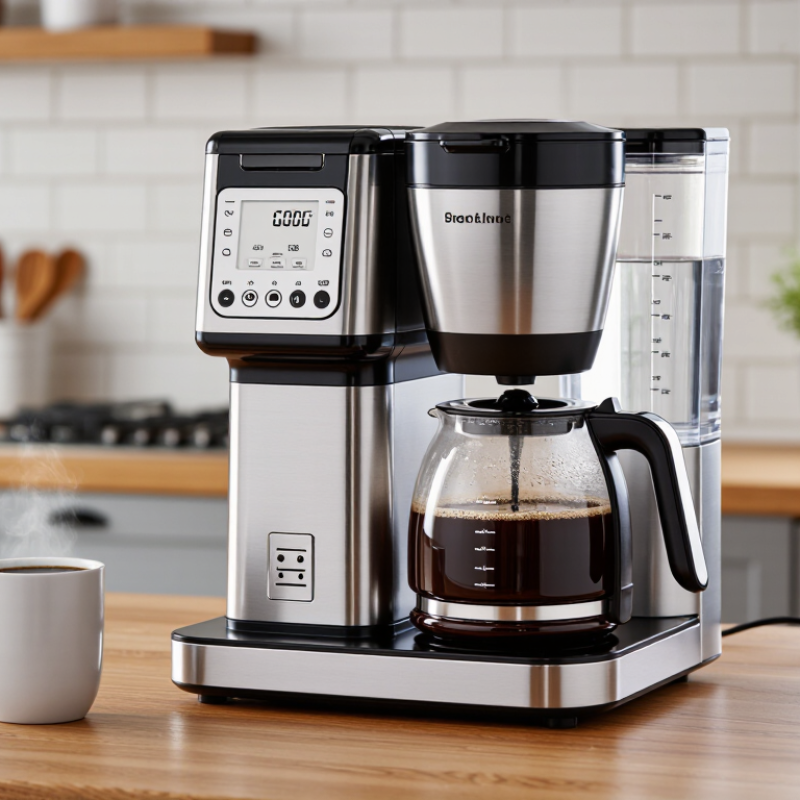
A filter machine is a small gravity-brewing system. A heating element warms water in its reservoir, then sends it through a tube to a showerhead. The water falls over ground coffee, dissolves soluble compounds, and drains through a filter into a carafe. Simple path. Yet uneven water flow can leave dry pockets in the coffee bed, making one cup taste both thin and bitter.
The Specialty Coffee Association’s Brewing Control Chart describes a balanced brew using roughly 18–22% extraction and 1.15–1.35% dissolved coffee solids. Its brewing guidance also places water temperature around 92–96°C. These ranges are useful reference points, not guarantees: grind size, dose, and water chemistry all affect the result. A finer grind slows drainage; too fine, and the cup may taste harsh. Paper filters usually catch more fine particles and oils than metal mesh, so the cup often feels cleaner.
At home, measure the coffee and water rather than guessing. A scale helps. The SCA’s common starting ratio is about 55 grams of coffee per litre of water, with room to adjust for taste. Check that the machine wets the grounds evenly and that its carafe is clean; old residue can dull fresh coffee. I still find machine brewing a little imperfect: shower patterns vary, and many models provide no easy way to measure brew temperature. That is worth noticing.
In 2026, a strong coffee filter machine should control water temperature and spread water evenly across the grounds. A useful range is roughly 92–96°C during brewing, though fresh coffee and grind size still affect the cup. Look for a wide showerhead, not a single narrow stream. Even saturation helps prevent dry patches and weak, uneven flavor.
Brew-basket design matters, too. A flat-bottom basket can make extraction more consistent, while a cone shape may suit some coffees better. Check whether the machine accepts common paper filters and has a removable basket for easy rinsing. A thermal carafe keeps coffee warm without continuous heating. Glass carafes are easy to inspect, but a hot plate can make coffee taste stale if it sits too long.
Useful controls should be simple: adjustable brew strength, a timer, and a small-batch setting for one or two cups. Pause-and-pour can help on rushed mornings, though it may drip if the carafe stays off the plate too long. Small details matter. Check the water reservoir markings and whether you can fill it without awkward spills. Noise, cleaning, and replacement-filter costs are easy to overlook. I’d weigh those daily inconveniences alongside brewing performance; a machine can look impressive and still be irritating at 6 a.m.
| Performance Feature | Useful Target or Benchmark | Why It Matters | What to Check Before Buying |
|---|---|---|---|
| Brew-water temperature | About 92–96°C (195–205°F) during brewing | Water in this range helps extract coffee consistently without relying on near-boiling water at the grounds. | Look for published brewing-temperature information or independent test results; a hot-plate temperature is not the same as brew-water temperature. |
| Showerhead coverage | Water distributed evenly across the coffee bed | More uniform wetting can reduce dry patches and uneven extraction. | Check whether the spray pattern reaches most of the grounds, especially when brewing a full pot. |
| Batch capacity | Choose a stated capacity that matches daily use; common household machines brew roughly 4–12 cups per batch. | A suitable batch size helps avoid repeatedly brewing too little or leaving excess coffee unused. | Check the manufacturer’s cup measurement: a machine “cup” may be smaller than a standard 240 ml mug. |
| Carafe and heat retention | Thermal carafe for retaining heat without a warming plate, or glass carafe with a controllable warming plate | The serving vessel affects how well coffee stays hot and how its flavor changes while standing. | Consider serving time, ease of pouring, lid cleaning, and whether the warming plate can be switched off. |
| Batch consistency | Similar taste and brewing behavior across repeated batches at the same dose and grind | Consistent brewing makes it easier to repeat a preferred recipe and compare beans. | Look for repeatability testing, stable water delivery, and a filter basket that sits securely in place. |
| Controls and programmability | Clear, dependable start controls; a timer is useful when scheduled brewing is needed. | Straightforward controls make daily operation easier, while a timer adds convenience but does not improve extraction by itself. | Check timer accuracy, clock settings, auto-shutoff behavior, and whether essential functions are easy to use. |
| Filter compatibility | Clearly specified basket shape and compatible paper or reusable filters | Filter shape and material affect fit, cleanup, and the amount of oils and fine particles in the cup. | Confirm that replacement filters are easy to find and that reusable parts can be cleaned thoroughly. |
| Cleaning and maintenance | Removable, washable brew parts and clear descaling instructions | Regular cleaning helps prevent residue buildup; descaling helps address mineral deposits from water. | Check which parts are dishwasher-safe, whether the water reservoir is accessible, and how the machine signals or describes descaling. |
| Ease of repair and ownership | Accessible user documentation, replaceable wear parts where available, and a clearly stated warranty | Support and parts availability can affect the cost and practicality of keeping a machine in service. | Review warranty terms, support options, and the availability of carafes, lids, baskets, and other replacement parts. |
These are general buying benchmarks rather than specifications for a particular machine. Actual brew results also depend on the coffee dose, grind size, water quality, and freshness of the beans.
What Is the Best Coffee Filter Machine in 2026?
Main Types of Coffee Filter Machines
The best coffee filter machine depends on how much coffee you make and how involved you want to be. Automatic drip machines heat water and spread it over ground coffee with little effort. They suit busy mornings and shared kitchens. Some models let you adjust brew strength or schedule a cycle, though extra settings do not guarantee better flavor. A flat-bottom basket can produce an even, familiar cup; a cone-shaped basket may highlight brighter notes. Small details matter.
Manual pour-over brewers give you more control over pouring speed and water temperature. They need a kettle, a steady hand, and a few extra minutes. The results can be rewarding, but inconsistent pouring may leave some grounds under-extracted. Single-serve filter machines offer quick portions and less leftover coffee. Batch brewers are more practical for several cups at once. Thermal carafes help retain warmth without leaving coffee on a hot plate, although they can be awkward to clean.
Tips: Match capacity to your usual routine, not an occasional gathering. Check whether the filter basket is easy to remove and rinse. If possible, compare brew temperature and cycle time, too. Keep expectations realistic: fresh grounds and clean equipment matter, but no machine fixes every weak cup.
Compare a filter coffee machine by the cup it needs to make, not by its feature count. The Specialty Coffee Association’s Golden Cup Standard recommends about 55 grams of coffee per litre of water, with a tolerance of 10 percent. That gives you a practical test: can the machine brew a small mug and a full pot without tasting thin or harsh? Check whether its water reservoir matches your routine, and whether the basket is easy to remove and rinse. Small details matter. A dripping basket can make the counter messy before your first sip.
For households that brew several cups at once, look for a stable hot plate and a clearly marked carafe. If you make one cup at a time, a smaller batch setting may reduce waste. The National Coffee Association’s 2024 National Coffee Data Trends report found that 67 percent of U.S. adults had coffee the previous day, a reminder that daily convenience matters. Still, frequency alone cannot tell you which machine fits. Compare brewing temperature, cycle time, filter availability, and how easily you can clean the parts that touch coffee. I would not trust a long feature list on its own. Even a machine with precise controls can disappoint if its smallest brew tastes weak. Check independent temperature tests where available, then try your usual dose and mug size at home.
Compare machines by how much coffee you usually brew at once. These bars show representative rated batch sizes—not market averages. “Cups” are coffee-maker cups, which often measure 5 fl oz (about 148 mL); exact capacities vary by model.
Choose a single-cup machine for one serving, a small-batch machine for a few people, or a full-size machine for larger households and shared spaces. For brew quality, also check temperature control and whether the machine suits your preferred coffee-to-water ratio.
Choosing a filter coffee machine starts with your morning routine. A compact one suits a small kitchen, while a larger carafe helps when several people drink coffee. Check whether the basket and carafe are easy to remove and wash. A pause-and-pour feature can be useful, but it may drip if rushed. Small details matter. Look for clear controls and readily available paper or reusable filters. A machine is only convenient if its parts fit your habits.
Tips: Rinse the carafe and filter basket after each use. Empty wet grounds promptly; they can leave a stale smell. Wipe the warming plate once it cools. Follow the manual’s descaling schedule, since mineral buildup can slow brewing and affect taste. Use clean, fresh water, and avoid abrasive scrubbers on coated surfaces.
Careful maintenance helps, but it cannot fix every weak cup. If coffee tastes flat, check the freshness of the beans and the grind before blaming the machine. I sometimes forget to clean the basket right away, and the next brew reminds me. That is a small, useful warning. Choose a model you can maintain without turning cleanup into another chore.
A heating element warms water and sends it through a tube to a showerhead. Water falls over the grounds, then drains through a filter into a carafe. A simple process.
A useful reference range is 92–96°C. It is not a guarantee; grind size, coffee dose, and water chemistry also affect the cup.
About 55 grams per litre is a practical starting point. Try a little more or less to suit your taste.
Uneven water flow can leave dry pockets in the coffee bed. A grind that is too fine may also slow drainage and create a harsh taste.
Paper filters usually catch more fine particles and oils than metal mesh. The coffee often feels cleaner, though personal preference matters.
Try your usual dose in both a small mug and a full carafe. Check the reservoir markings, basket removal, cycle time, and cleaning access. Small details count.
Rinse the basket and carafe after brewing. Old coffee residue can dull a fresh cup. Easy to overlook.
Not necessarily. Check temperature tests when available, and see whether the machine handles your usual mug size well. Precise controls can still disappoint.
Choosing the best Coffee Filter Machine in 2026 starts with understanding how it works: hot water passes through ground coffee and a filter, then drips into a pot or cup. The quality of the brew depends on how consistently the machine controls water temperature, flow, and contact time. Useful features may include adjustable brew strength, a programmable timer, a reliable warming plate, and removable parts that are easy to clean.
Filter coffee machines come in several forms, from simple manual-drip models to automatic and more customizable machines. The right option depends on how much coffee you make, how quickly you want it, how much control you prefer, and the space available in your kitchen. Compare capacity, ease of use, brewing consistency, and ongoing filter needs before deciding. Regularly cleaning the water reservoir, basket, and carafe—and descaling when needed—helps maintain performance and keeps each brew tasting fresh.
